World
Cocaine Disappears From Fiji Court Vault, Replaced With Flour
By Muvi TV News Desk·October 3, 2026
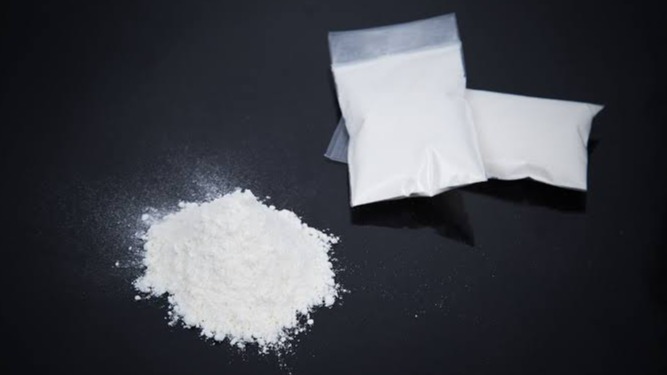
For more than five years, 39 bars of cocaine sat locked inside the evidence vault of Fiji's High Court in Suva, kept there as proof in one of the Pacific nation's most significant drug cases. When officials finally opened the vault to check on them this September, the bars were still there, still wrapped, still weighing roughly what they should. But the cocaine itself was gone and replaced by flour.
The seized drugs, nearly 40 kilograms in total and worth an estimated US$14 million on the street, had originally been confiscated in 2019 as part of the case against Joshua Rahman, convicted of possessing what prosecutors at the time called one of the largest cocaine hauls in Fiji's history. The bars tested positive for cocaine in both February and July of that year. By March 2021, they had been transferred into the court's own storage vault for safekeeping, exhibits in a case that had already made its way through Fiji's justice system. There they were meant to remain, untouched, until September 2026, when the substitution was discovered.
Police have confirmed that forensic testing shows the bars had been tampered with, and that all 39 now contain flour rather than cocaine. Investigators say suspicion is centred on staff who managed exhibits at the High Court Registry, the small circle of people with legitimate access to a vault that was, until this month, assumed to be one of the most secure rooms in the country's justice system.
"The disappearance tells everybody that it was not secure," Prime Minister Sitiveni Rabuka said, a blunt admission that an institution built to guarantee the integrity of evidence had, for some unknown stretch of time, guaranteed nothing at all.
Opposition MP Jone Usamate went further, calling the episode “a sad indictment” of the court system and raising concerns about what else may have been compromised in the same vault, including whether other exhibits could have been swapped without detection and for how long.
Fiji's police commissioner, Rusiate Tudravu, has sought to project both urgency and caution in equal measure. "While I understand that the sense of urgency is demanding quicker results, we are doing our best to ensure justice prevails," he said, as his officers work through statements already taken from 27 people. Six individuals have been identified as persons of interest, one of them currently overseas and expected to be questioned once located. A digital forensic team has been assigned to pull CCTV footage and biometric access records from the vault's entry system, in an attempt to reconstruct exactly when, and by whom, the switch was made.
Justice Minister Siromi Turaga described the discovery as "shocking" and promised accountability. "No stone will be left unturned," he said. "Anyone found guilty will be held accountable." For now, the central mystery remains unsolved: millions of dollars' worth of cocaine, once central to a landmark prosecution, has simply disappeared, replaced by something a baker might buy at any Suva market. Fiji's government has set up a dedicated investigation team at CID headquarters to find out where it went, and who moved it.
Stay with MUVI
Follow our reporting wherever you are