Politics
Do Political Rallies Still Win Elections?
Every election season, Zambia's politicians compete to fill stadiums and town squares.
By MUVI Editorial·July 11, 2026
Every election season, Zambia's politicians compete to fill stadiums and town squares.
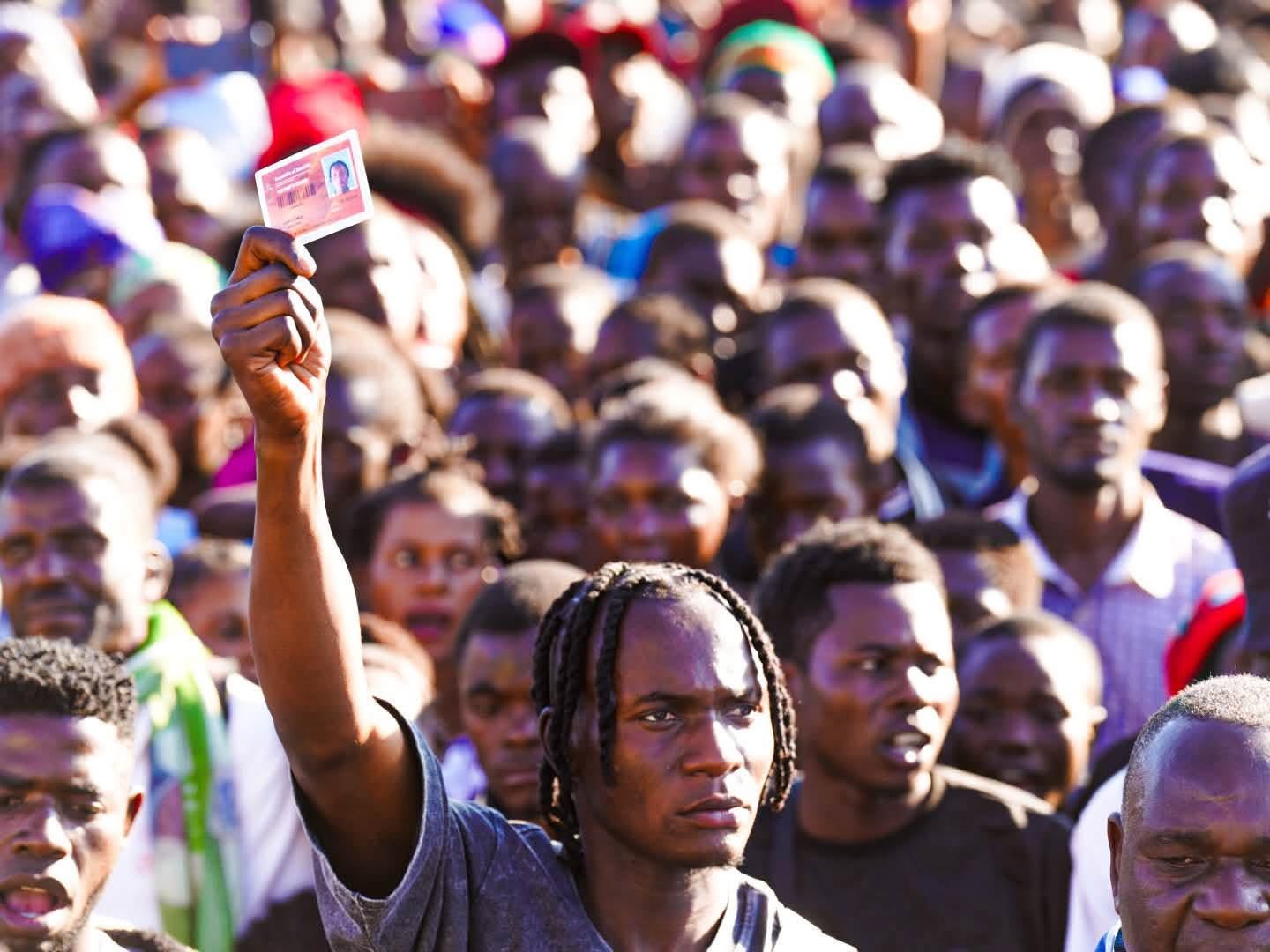
Every election season, Zambia's politicians compete to fill stadiums and town squares.
But in an age of smartphones, TikTok and WhatsApp, an uncomfortable question is emerging: are rallies still the most important battleground or simply the most visible one?
If you judged Zambia's election by photographs alone, the winner would be obvious.
Thousands of supporters wearing party colours. Helicopters circling overhead. Convoys stretching for kilometres. Crowds dancing long before politicians even arrive. Every campaign wants to produce that one image: a sea of people that seems to declare, "The country is with us."
But there is another question that receives far less attention:
Do rallies actually change votes, or are they mostly political theatre?
The Politics of the Crowd
Political rallies have always served an important purpose. They energise supporters, attract media attention and create momentum. A full stadium sends a psychological message that a campaign is growing, while an empty field can suggest the opposite.
That is why parties invest enormous amounts of money transporting supporters, erecting stages, hiring sound systems and organising logistics. Crowds create headlines, and headlines shape perception. In politics, perception often becomes reality.
But Elections Are Won in Private
There is one problem.
People do not vote in crowds.
They vote alone.
Inside the polling booth there are no campaign songs, no cheering supporters and no party regalia. There is only one voter and one ballot paper.
Political scientists have long observed that public enthusiasm and private voting do not always match. Many people attend rallies because they enjoy the entertainment. Others go because a candidate is visiting their community for the first time.
Some are simply curious. Others are transported by local organisers or attend rallies for several different parties during the campaign. Attendance does not automatically equal support.
This is one reason political rallies can be misleading. A packed stadium may demonstrate enthusiasm, but it does not necessarily reveal how people will vote once they are alone with a ballot paper.
The Smartphone Has Changed Everything
Perhaps the biggest change is technological.
Twenty years ago, if a politician wanted to reach fifty thousand people, they needed a stadium. Today, they may only need a smartphone. A two-minute speech delivered in Chipata can be watched in Solwezi, Mongu, Kasama and Livingstone before sunset.
A campaign clip can reach millions without a single campaign vehicle leaving Lusaka.
Increasingly, elections are being fought on Facebook, TikTok, WhatsApp and YouTube just as much as they are on football grounds.
The rally has not disappeared. It has simply changed its purpose.
Today, the people standing in front of the stage are only part of the audience. The real audience is often the thousands—or even millions—who watch the clips later on their phones. In many ways, the rally has become content.
The Zambian Experience
Zambia's political history offers an interesting reminder that large crowds do not always translate into election victories.
Election after election, parties have pointed to overflowing rallies as proof that momentum is on their side. Yet history has shown that predicting an election from crowd sizes alone is risky. Some rallies draw genuine supporters.
Others attract curious onlookers, local residents, or people who simply want to witness the spectacle. In some communities, it is not unusual for the same people to attend rallies for different political parties during the same campaign season.
That is why experienced political strategists often treat rallies as a measure of enthusiasm rather than a predictor of votes. They are useful for energising supporters and demonstrating organisational strength, but they are only one piece of a much larger electoral puzzle.
Why Parties Still Fill Stadiums
If rallies no longer guarantee votes, why do politicians continue investing so heavily in them?
Because rallies influence far more than voters. They motivate party structures, energise volunteers, reassure donors, impress undecided local leaders and dominate news bulletins. Perhaps most importantly, they convince supporters that victory is possible.
Campaigns are powered as much by belief as they are by policy. A successful rally signals momentum—not only to the public, but also to party members, campaign financiers and candidates themselves.
The Election After the Rally
Yet the voter who ultimately decides an election is often not the person standing closest to the stage.
It is the mother comparing food prices before buying mealie meal. It is the unemployed graduate searching for work. It is the farmer waiting for fertiliser. It is the small business owner calculating the next electricity bill.
Their decision is usually shaped less by the size of a rally than by the state of their own household. That is why incumbents campaign on their record while challengers campaign on promises. Crowds may create excitement, but living conditions often determine votes.
The Real Measure
Perhaps Zambia asks the wrong question every election.
Instead of asking which party held the biggest rally, perhaps we should ask a harder one:
Which party is changing the minds of people who never attend rallies at all?
Those voters rarely appear in campaign photographs. They do not trend on social media. They do not dance in party regalia. Yet they often decide who governs.
That is the quiet paradox of democracy.
The loudest part of an election may not be the most important. The biggest crowd does not always produce the biggest vote. And when the last campaign song has faded, the stages have been dismantled and the flags have been folded away, it is not the rally that matters most.
It is the ballot.
Stay with MUVI
Follow our reporting wherever you are