
Have We Forgotten Zambia's Boy Child?
By MUVI Editorial·September 25, 2026
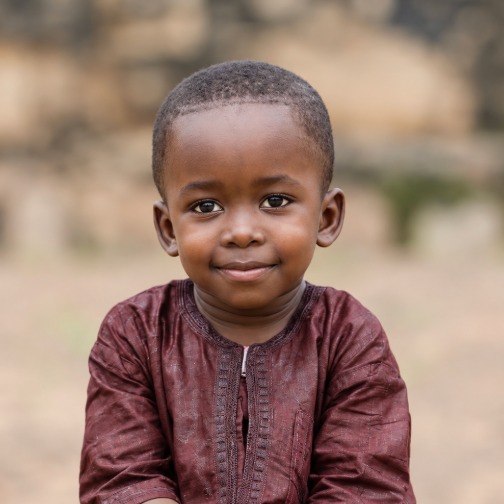
One detail stood out sharply in the 2026 Examinations Council of Zambia's GCE report. Out of the 130,866 candidates who sat the exam, just 39,045 were male against 91,821 female, meaning female candidates made up over 70 percent of everyone who wrote the paper.
IT IS NOT JUST A FEELING
That question has a name in Zambia now, and it has reached the very top of government. President Hakainde Hichilema has himself cautioned that "the boy child feels left out," a remark researchers studying the issue point to as evidence that Zambia's child rights conversation has become unbalanced, with significant attention directed toward empowering the girl child while the specific vulnerabilities boys face go comparatively unexamined. A study focused specifically on Lusaka District, published this year, described the pattern bluntly: "the focus on girl child empowerment amid boy child neglect has led to widespread feelings that boys have been left behind after many years of prioritising girls." The researchers were careful to frame this not as an argument against girls' empowerment, which they explicitly said must continue, but as a call for what one analysis called a "gender-responsive, not just gender-compensatory" approach, one that does not require reversing gains for girls in order to finally notice what boys are going through.
WHAT BOYS ARE ACTUALLY STRUGGLING WITH
The challenges researchers and advocates describe are specific rather than vague. School dropout features prominently, alongside child labour and exposure to violence, issues a recent policy analysis argued Zambia's child protection institutions have not been adequately trained or resourced to recognise in boys specifically. The Boy Child Advocacy Zambia, a registered NGO founded in 2019 and formally recognised in 2024, has focused much of its public messaging on substance abuse and gambling among boys, warning that both issues are rising and calling for schools and community centres to build dedicated awareness programmes, counselling access and peer support groups aimed specifically at boys and young men.
That mental health dimension came through clearly in reporting by the Lusaka Star, in which a University of Zambia psychology student, Evaristo Sapalo, argued for more support groups offering boys "safe spaces... to open up about anything troubling them." Mental health advocate Ishmael Gumbo went further, describing a structural imbalance in where Zambian society currently directs its attention. "Society is increasingly shifting its focus toward girls, especially in areas such as education, mental health awareness, and the proliferation of advocacy groups," he said, calling it "a very critical and timely conversation that is tapping into the core of many struggles boys and men are silently enduring in today's society, especially in Zambia."
WHY THE SILENCE ITSELF IS PART OF THE PROBLEM
Much of the research converges on one particular obstacle: boys are often simply less likely to talk about what they are experiencing at all. Where girls' struggles have, over the past two decades, been given organised advocacy language, dedicated programming and sustained media attention, boys' struggles have more often gone unnamed, treated as individual behavioural problems, truancy, aggression, substance use, rather than symptoms of a wider pattern worth examining structurally. That silence compounds the data gap itself; the Lusaka District study noted plainly that there remains "a gap in knowledge regarding the factors contributing to the neglect of the boy child in Zambia," meaning even the researchers trying to study this properly are working with less information than exists for girls' education and wellbeing.
WHAT WOULD ACTUALLY CHANGE THE PICTURE
The recommendations emerging from this research are consistent, and notably modest in what they ask for. Better data collection specifically tracking boys' school dropout, labour and welfare outcomes. Gender-inclusive training for teachers, social workers and child protection officers, so that a boy showing warning signs is recognised as readily as a girl would be. Stronger collaboration between government, schools, civil society and communities, rather than boy-focused advocacy operating in a separate lane from the broader child rights conversation. None of this requires diverting resources away from girls' education, a point every source consulted for this piece was careful to make explicitly. It requires, instead, an honest acknowledgment that a rights framework built primarily around one gender's vulnerabilities will, almost by design, miss the other's, and that noticing the boy child's struggles now is not a retreat from protecting the girl child, but the next, overdue chapter in the same commitment to protecting every Zambian child equally.
Stay with MUVI
Follow our reporting wherever you are