
How Benin Turned Cotonou Into One of Africa's Cleanest Cities in a Decade
·August 25, 2026
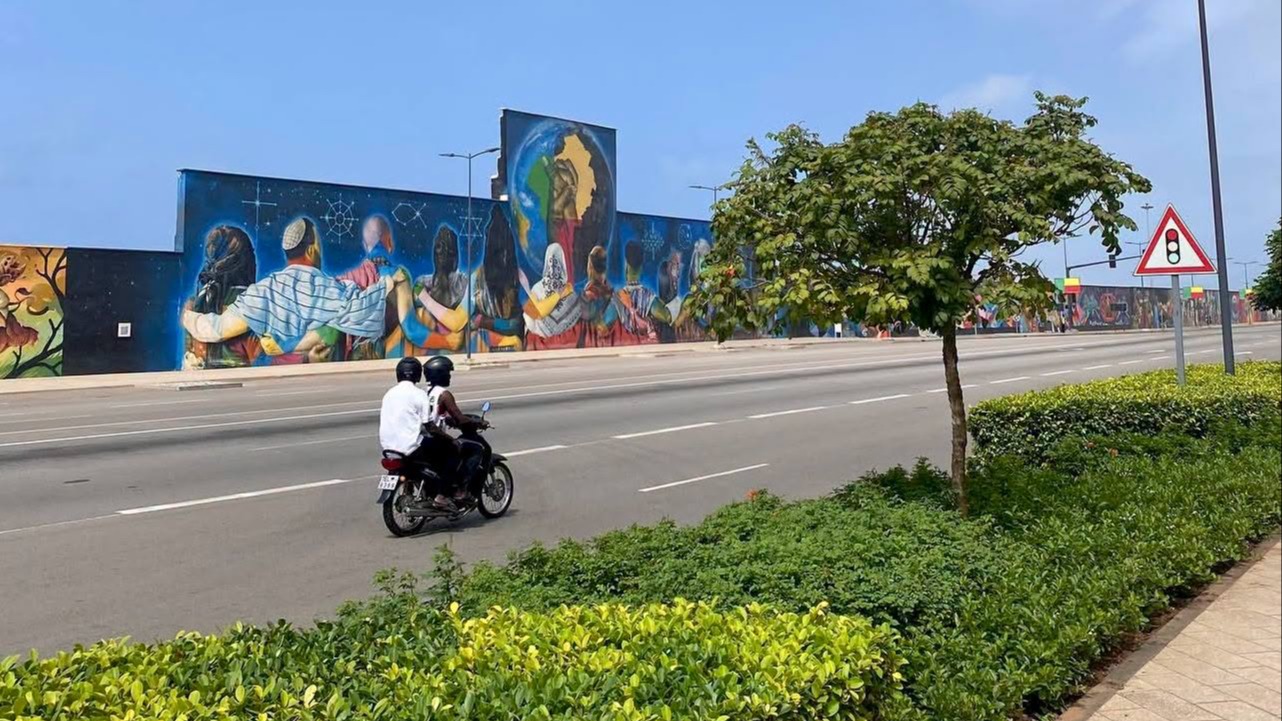
A decade ago, waste management in Benin's largest city was, by the country's own data, close to non-existent in any organised sense. Today, Cotonou ranks among the three cleanest cities on the African continent. The story of how it got there offers a rare, concrete example of a West African government treating sanitation not as an afterthought, but as a deliberate, sustained infrastructure project.
WHERE IT STARTED
As recently as Benin's 2013 national census, roughly 90 percent of Beninese disposed of household waste indiscriminately, burning it, burying it, or dumping it in open ground. Academic research on Cotonou specifically, examining the waste system that existed before reform, found that only about a third of households even owned a proper bin, and just 16 percent had their rubbish collected by any organised service at all. Waste sat in streets and drainage channels, a familiar picture across much of urban West Africa, and one that carried real public health costs in a fast-growing city.
THE TURNING POINT
The shift began in 2018, when the Beninese government created the Société de Gestion des Déchets et de la Salubrité, known as SGDS, a dedicated public waste and sanitation management company for the Grand Nokoué metropolitan area, home to roughly 2.8 million people and covering Cotonou, the administrative capital Porto-Novo, and the surrounding communes of Abomey-Calavi and Sèmè-Podji. A broader modernisation programme followed in 2019, systematising the collection, pre-collection and transportation of household waste and establishing controlled landfill sites in place of the informal dumping that had defined the previous decade.
The change was not merely administrative. Residents and researchers tracking the transition describe a genuinely new experience of city life: streets that once accumulated visible refuse now have a functioning collection system reaching neighbourhoods that previously had none. Writing this year, one long-time observer of the reforms put it plainly: "There is an entire system put in place for waste collection in the Greater Nokoué, Cotonou, Calavi, Porto-Novo, Sèmè, and Ouidah, so that waste is no longer a problem," while noting the work is not yet finished and questions remain about recycling capacity and conditions for waste workers.
Benin paired the waste overhaul with parallel investment in sanitation more broadly. A new faecal sludge treatment plant in Sèmè-Kpodji became operational in May 2023 and now serves more than a million people, part of a wider government push spanning health, tourism, agriculture and infrastructure that the World Bank has described as a deliberate structural transformation effort, not a series of isolated projects.
THE RESULT
The Grand Nokoué region now generates an estimated 607,000 tonnes of household waste a year, a figure that reflects both the region's growth and the scale of what its waste system now actually processes, rather than what simply accumulated in the streets, as was common before 2018. That systemic capacity shows up in international rankings: The Africa Report's most recent cleanliness rankings place Cotonou third among African cities, with a score of 7.6, up from sixth place previously, behind only Kigali, long considered the continent's cleanliness benchmark, and Rabat.
Benin is not finished. The government, together with the European Bank for Reconstruction and Development and the European Investment Bank, launched a further modernisation project this year aimed at moving the Grand Nokoué region away from a landfill-dependent model entirely and increasing recycling capacity, described by EBRD's Head of Benin as building "on the progress and transformation that started with the creation of SGDS a few years ago."
WHY IT MATTERS BEYOND BENIN
Cotonou's rise from a city with almost no formal waste collection to one of Africa's three cleanest in under a decade did not happen through a single clean-up campaign or a public awareness drive alone. It happened because government created a dedicated institution with a specific mandate, funded it consistently over several years, and treated sanitation infrastructure with the same seriousness typically reserved for roads or electricity. For any African city still relying on informal dumping and ad hoc collection, that is the more transferable lesson: cleanliness, at scale, is not the outcome of asking citizens to litter less. It is the outcome of building a system capable of collecting what they throw away.
Stay with MUVI
Follow our reporting wherever you are