
Lusaka’s Fight Against Congestion Meets Its Fight Against Cholera
By MUVI Editorial·October 2, 2026
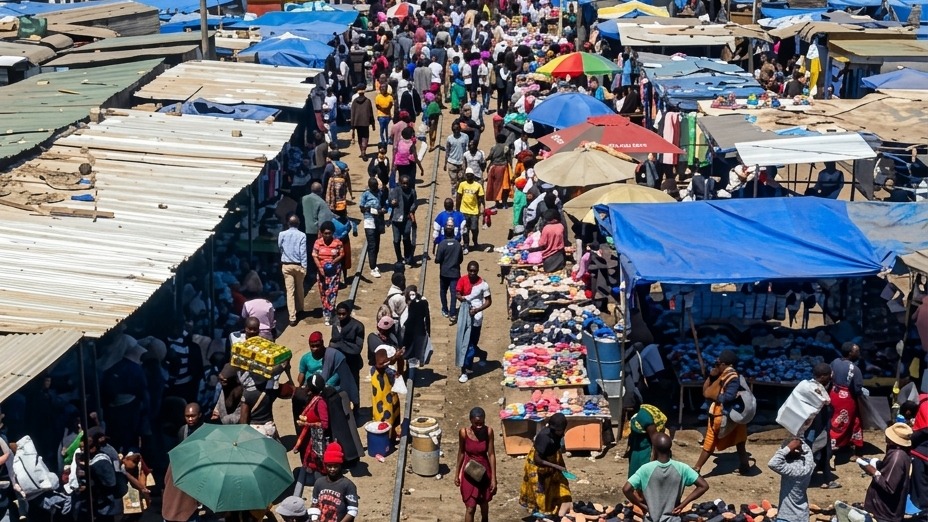
Lusaka City Council's five-phase decongestion plan, the strategy behind this week's Operation Clear Path, which begins moving street vendors and buses out of unauthorised spots in the city from 3 October, has so far been framed by the council mainly as a question of order - free pavements, free-flowing traffic, buses confined to designated stations.
Mayor Chitambala Mwewa has pointed to Lusaka's cholera situation, citing 130 cases recorded in the district, as part of the justification for Operation Clear Path specifically, but the council has not explicitly connected its broader five-phase decongestion plan to the city's cholera response. Perhaps decongesting Lusaka's streets, as laid out in that wider plan, could help bring cholera under control.
THE PUBLIC HEALTH LOGIC
Cholera spreads through water and food contaminated with the bacteria that causes it, and Lusaka's informal trading areas have long been identified as a weak point in the city's sanitation chain. Uncollected waste accumulates near trading spots, vendors frequently operate without access to clean water or proper toilets, and blocked drains back up during rainy season, creating conditions in which the disease can spread.
This isn't a new concern as Zambia's severe 2017-18 cholera outbreak was partly traced to contaminated street food, which is what prompted the country's last major crackdown on street vending, when police and soldiers demolished roughly 10,000 vendor stalls in Lusaka in January 2018.
On that logic, a plan that moves trading activity off congested, poorly serviced streets and into managed markets could plausibly reduce one of the conditions that allows cholera to spread in the city.
WHAT THE FIVE-PHASE PLAN ACTUALLY DOES
The decongestion plan now being rolled out began with relocating traders from Kalusha Bwalya Road and Simon Mwewa Lane into the Simon Mwewa Lane Market, with the council indicating the model would be replicated across other CBD trouble spots and wider parts of the city.
It also introduces an electronic system for market levy payments, intended to reduce revenue leakages and improve accountability. None of the public descriptions of the plan's five phases, as reported so far, explicitly reference sanitation infrastructure, water access or disease control as objectives in their own right; the stated focus has been order, traffic flow and formalising trade.
That absence matters for assessing whether the plan can do double duty as a cholera intervention. A decongestion plan built around relocating vendors and digitising levy payments is not automatically a sanitation plan, even if moving people off the street happens to reduce some exposure.
The Capacity Problem
Any public health benefit from decongestion depends heavily on where vendors actually end up. The Zambia Institute of Architects estimates that between 250,000 and 350,000 informal traders operate in Lusaka, while the city's 31 main markets have only around 11,000 designated trading spaces, of which roughly 4,400 are currently occupied by registered traders.
That gap is large enough to raise doubts about whether the markets receiving relocated vendors have the water, toilets and waste management capacity to actually be cleaner and safer than the street vendors are being moved from. If they don't, decongestion could simply concentrate the same sanitation risks in a smaller number of locations rather than eliminating them. The Institute's president has separately warned that forcing informal traders, who make up an estimated 72 percent of Lusaka's workforce, into existing markets too quickly risks creating new social and economic pressure.
A Pattern of Note
Lusaka has attempted vendor decongestion multiple times since the 2007 Street Vending and Nuisances Act gave the council legal authority to act, with enforcement repeatedly introduced and then quietly abandoned. The 2018 crackdown, the most forceful version to date, triggered riots in Kanyama and required a military response to contain, and vending returned to Lusaka's streets within a few years regardless. Vendors have already defied an earlier council deadline this week ahead of Operation Clear Path's official start, suggesting this round may face similar resistance.
Whether a decongestion plan built primarily around order and formalisation ends up reducing cholera risk, rather than simply relocating it, will likely depend on factors the plan's public description has not yet addressed: whether the markets vendors are moved into have adequate water and sanitation, and whether the relocation holds over time rather than reversing once enforcement attention moves elsewhere.
Stay with MUVI
Follow our reporting wherever you are