
Munthali Challenges Mwiimbu Report, Says Some UN Concerns Have "Truth"
·September 4, 2026
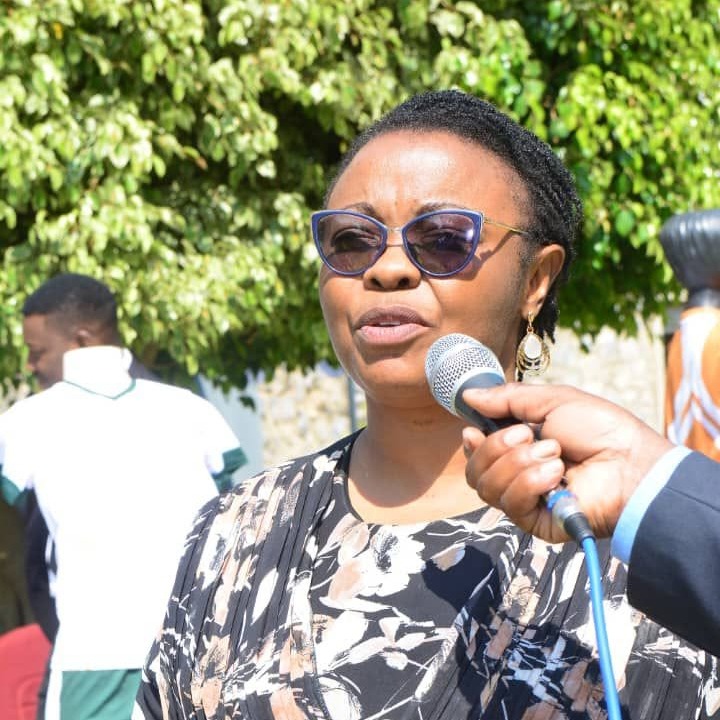
Newly elected Mafinga South Member of Parliament Faith Munthali has challenged former Home Affairs Minister Jack Mwiimbu’s dismissal of findings by the United Nations Special Rapporteur on Zambia’s post-election situation, saying some of the concerns raised are consistent with her own experience.
Munthali, speaking in Parliament, did not reject Mwiimbu’s position entirely. She acknowledged that some exaggerated or inaccurate claims have been circulated about the treatment of opposition members.
However, she said events in her own constituency suggest that some of the concerns raised by the UN Special Rapporteur deserve further investigation.
MUNTHALI CITES MAFINGA INCIDENTS
Munthali told Parliament that her vehicle was damaged during the nomination period and that the incident was reported to police, but no action had been taken.
She further said three members of her team were detained during the election period and, at the time of her remarks, remained in custody without bail weeks after the 13 August election.
“I feel some of the stories being told by the UN rapporteur have some truth in them,” Munthali said.
She argued that Mwiimbu was “giving the side of the story that has not been well said” and called on authorities to visit Mafinga South and the Isoka Police Sub-station to establish what happened.
“Zambia needs peace,” she said. “There can never be reconciliation if others are still languishing in cells without being given justice.”
WHY MUNTHALI’S ACCOUNT IS SIGNIFICANT
The intervention adds a different dimension to the ongoing dispute over the UN Special Rapporteur’s findings.
Claims of arrests, prolonged detention and political intimidation have been raised by opposition parties, civil society organisations and other bodies during the post-election period.
Munthali’s account, however, places specific allegations before Parliament from an elected MP who says the incidents affected people directly connected to her campaign.
Her testimony does not, on its own, establish the accuracy of all the allegations contained in the UN Special Rapporteur’s findings. Munthali herself acknowledged that some claims circulating in the country have been exaggerated.
But her account raises questions about the government’s broader rejection of concerns surrounding arrests and detentions because she identified specific incidents, a constituency and a police facility that authorities can investigate and respond to.
GOVERNMENT DISPUTES UN FINDINGS
Mwiimbu’s remarks followed the government’s broader rejection of aspects of the UN Special Rapporteur’s assessment of Zambia.
Among the issues disputed was a claim that treason remains a capital offence in Zambia. The death penalty was abolished in 2022, making that particular characterisation inaccurate.
The government has also rejected descriptions of recent detentions as part of a political “crackdown” and disputed the characterisation of those detained as “political detainees.”
Munthali did not address the Special Rapporteur’s claim concerning the death penalty. Instead, her intervention focused on whether some of the underlying concerns about arrests, detention and access to justice have a factual basis.
Her request effectively places the focus on individual cases that can be independently examined.
KALABA RAISES ABDUCTION ALLEGATION
The controversy has since widened following claims by Citizens First President Harry Kalaba concerning Munthali’s safety.
Kalaba said his party had received what he described as “credible information” suggesting there was a plan to abduct the Mafinga South MP.
MUVI TV has not independently verified the alleged abduction plan and is treating the allegation as an unconfirmed claim.
Kalaba also raised concerns about reports of opposition supporters allegedly being detained for extended periods without appearing before court, which he described as an abuse of the justice system.
The allegations add to calls for authorities to clarify the circumstances surrounding the individuals Munthali says remain in custody.
QUESTIONS NOW TURN TO THE SPECIFIC CASES
Munthali’s intervention does not resolve the wider dispute between the Zambian government and the UN Special Rapporteur.
It does, however, narrow part of that debate to claims that can potentially be verified.
Were three members of Munthali’s team detained during the election period? Are they still in custody? Have they been granted bail or appeared before a court? What became of the complaint concerning the damage to Munthali’s vehicle?
Those are questions that can be answered independently of the wider political disagreement surrounding the UN report.
Munthali’s central appeal was that authorities establish those facts.
“Zambia needs peace,” she told Parliament, arguing that reconciliation cannot take place while people remain in custody without receiving justice.
For the government, responding to the specific cases raised by the Mafinga South MP may now be as important as its broader response to the UN Special Rapporteur’s findings.
Stay with MUVI
Follow our reporting wherever you are