
NGOCC Welcomes Social Spending Gains but Warns of Funding Gaps in 2027 Budget
By Muvi TV News Desk·November 8, 2026
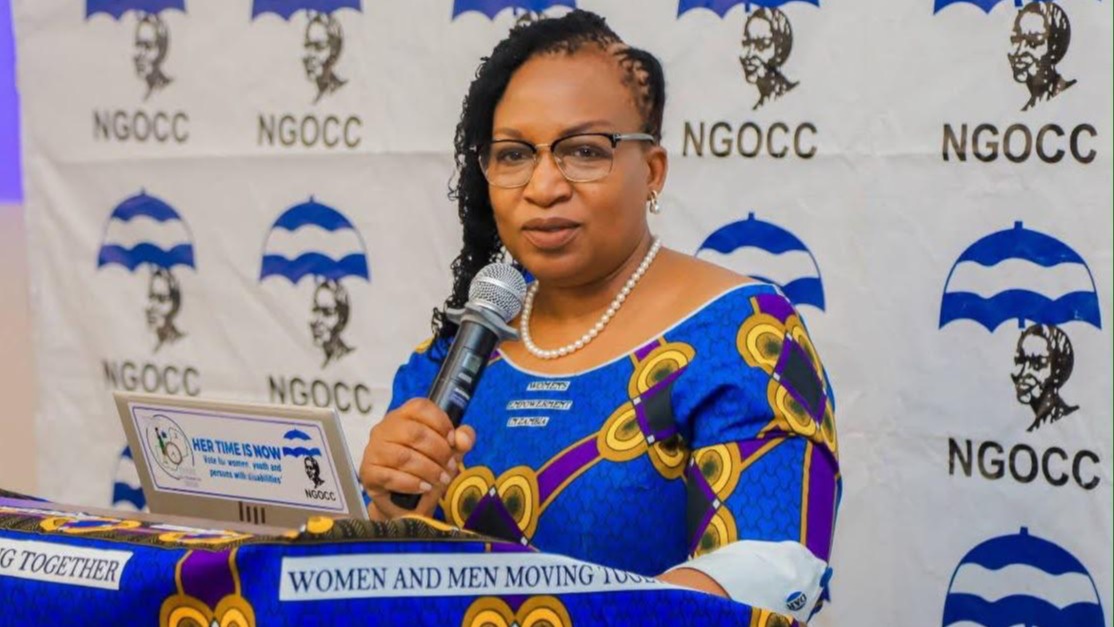
The Non-governmental Gender Organisations’ Coordinating Council (NGOCC) has welcomed several social sector measures in Zambia’s proposed K284.8 billion 2027 National Budget but says allocations for education, health and social protection remain below key international commitments.
In its preliminary assessment of the Budget, presented to Parliament by Finance and National Planning Minister Dr Situmbeko Musokotwane on Friday, 6 November 2026, NGOCC said the proposed spending must respond to the different needs of the population, particularly marginalised women and girls, who it says make up the majority of people living in poverty.
The organisation welcomed the near doubling of the school feeding programme allocation to K1 billion and the expansion of the Social Cash Transfer Programme to 1.6 million households, with monthly payments set at K450. It also commended the inclusion of beneficiaries in the National Health Insurance Scheme, the planned recruitment of 3,125 health workers and the establishment of new cancer hospitals.
NGOCC further welcomed the full duty and Value Added Tax exemption on raw materials used in the manufacture of sanitary products. It said the measure, which has been a long-standing demand of the women’s movement, should result in lower prices and improved access to sanitary products, including free sanitary pads for schoolgirls.
However, the organisation said the proposed allocations for key social sectors remained below international and regional benchmarks. It noted that education had been allocated 13.4 percent of the Budget, against the 15 percent benchmark it associates with the Dakar Framework for Action. Health received 10.6 percent, below the 15 percent target under the Abuja Declaration, while agriculture’s 8 percent allocation fell short of the 10 percent target under the Maputo Declaration.
NGOCC also raised concern over the social protection allocation, which it said had declined for the third consecutive year to 5.7 percent. It further noted that the Budget did not announce funding for teacher recruitment or boarding facilities for girls, while the allocation for drugs remained at K6.4 billion despite what it described as a funding gap following the withdrawal of USAID support.
The organisation said the K67.6 billion set aside for debt servicing was almost equivalent to the combined allocations for education and health, highlighting the competing demands on public resources.
It also warned that proposed tax measures, including an increase in Value Added Tax to 16.5 percent, higher sugar excise duty and mobile money levies, as well as the removal of tax relief on energy-saving appliances, could increase living costs for female-headed households and women traders.
On gender-based violence, NGOCC expressed concern that the Budget had not provided for the Anti-Gender-Based Violence Fund. It also called for the operationalisation of the Gender Equity and Equality Commission, provided for under Article 231 of the Constitution.
The organisation said deliberate measures and sex-disaggregated data were necessary to ensure that women farmers, traders and miners benefit from economic growth.
NGOCC has called on Parliament to increase the share of funding allocated to social protection, provide resources for the Anti-GBV Fund and the Gender Equity and Equality Commission, and make provision for teacher recruitment and girls’ boarding facilities.
It has also urged lawmakers to apply gender-responsive criteria to the K9 billion Constituency Development Fund and reconsider tax measures it considers likely to disproportionately affect vulnerable households.
The statement was issued by NGOCC Executive Director Anne Mbewe-Anamela.
Stay with MUVI
Follow our reporting wherever you are