
The Way Out of Illegal Mining May Start With Better Livelihoods
By MUVI Editorial·October 1, 2026
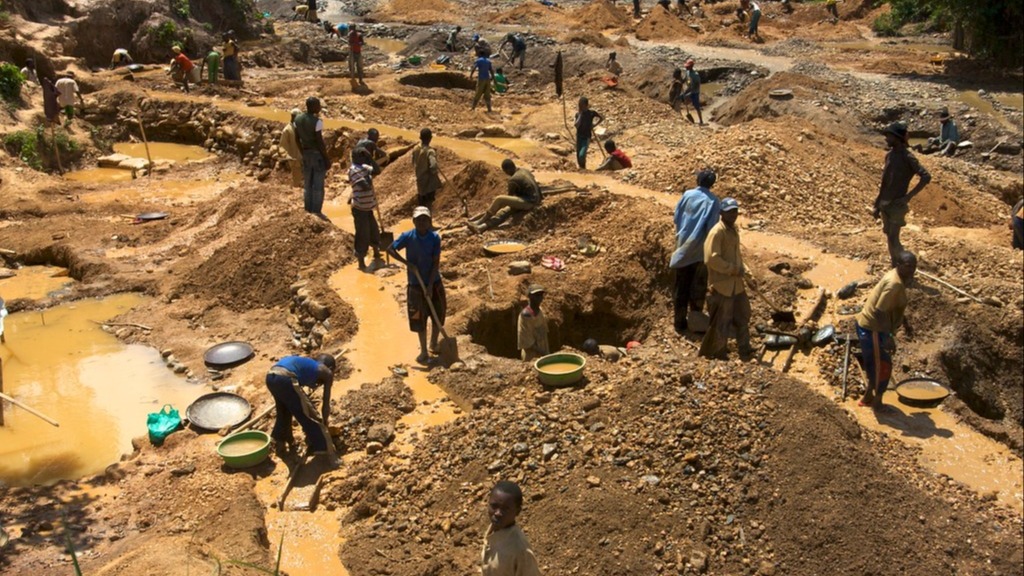
For some communities living around Zambia's mineral-rich areas, mining is more than an economic activity. It is a way of putting food on the table.
That reality is part of what makes illegal mining difficult to tackle. When people see gold, manganese or other minerals beneath the ground but have few other ways to earn an income, the temptation to enter an unlicensed mining area can be strong.
But the risks can be deadly. In September, four people died after allegedly entering an approximately 20-metre-deep pit while carrying out illegal mining in Milenge District. Preliminary findings indicated that the victims may have died from suffocation caused by low oxygen levels underground.
Such accidents have become part of the wider concern around illegal mining in Zambia. Parliament was told in 2025 that more than 100 people had died in illegal mining incidents since 2023, including 38 people killed when the ground collapsed in Chingola and 27 others in Mumbwa.
The danger is not limited to the miners themselves. Unregulated mining can also damage the environment, expose communities to unsafe conditions and deprive the country of revenue from mineral resources.
The Ministry of Mines has described illegal mining as a major challenge with environmental, economic and social consequences, while acknowledging the importance of artisanal and small-scale mining as a source of livelihoods.
One way to stop people from entering dangerous and illegal mining sites without taking away the income they depend on is to give communities something else to build.
Economic empowerment as another path
Economic empowerment does not mean telling people to simply stop mining and find another job. For communities with limited access to capital and formal employment, the alternative has to be practical. That can mean helping people form cooperatives, teaching them how to manage money, providing small amounts of capital and supporting businesses that can grow over time.
Government is already pursuing a similar approach within the mining sector itself.
In February, the Ministry of Mines told Parliament that its formalisation programme was moving beyond removing illegal miners from sites. The programme includes forming cooperatives, issuing artisanal mining rights, training miners in safety and preparing communities to operate legally. The Government said the approach would also be extended to areas including Chitambo, Serenje and Mpika.
The Government has also been developing a Small Scale Mining Fund intended to provide support to artisanal and small-scale miners, with regulations being finalised in 2026.
But not every person living in a mining community necessarily wants to become a formal miner. That is where alternative businesses can become important.
A poultry business in Serenje
In Serenje District, the Centre for Environment Justice is trying a different approach.
Through a two-year Southern Africa Trust project in the TAZARA area, CEJ is working with youth, women and men on responsible business and mining practices while also supporting economic empowerment.
According to CEJ Executive Director Maggie Mapalo Mwape, beneficiaries receive training in financial literacy, savings, financial management and sustainable livelihoods before forming groups.
One of those groups is Twatasha. The group initially received a grant of about K10,000 to pursue sustainable activities, including poultry farming. It later graduated from a savings group into a cooperative, giving it a formal structure through which it can seek support from institutions such as the Constituency Development Fund and other financing bodies.
After what CEJ described as good performance in the first phase, the grant was increased to K50,000. Twatasha has since bought land and is constructing a poultry house. The group currently has more than 100 birds and is targeting 800 birds per production cycle.
It is a small example, but it points to a bigger idea. A family that can earn from poultry, farming, trading or another sustainable business has another source of income to rely on. That does not automatically eliminate illegal mining, but it can reduce the economic pressure that pushes people towards risky activities.
The bigger challenge
Serenje is a mining district with significant manganese deposits, and CEJ says illegal gold and manganese mining is visible in parts of Serenje and neighbouring Chitambo.
The challenge, therefore, is not simply stopping illegal miners.
It is creating an economy around mining communities in which people can benefit from the resources around them without having to put their lives at risk and that requires more than one intervention.
Formal miners need access to licences, capital, equipment, technical skills and safe working conditions. Communities also need opportunities outside mining, particularly for young people and households that do not have the resources to enter the formal mining sector.
Zambia's own mining policy recognises that artisanal and small-scale mining is an important source of livelihoods but identifies lack of capital, technology and market access as some of the factors that contribute to unsafe and informal operations. It also calls for stronger cooperatives, access to finance, equipment and markets.
This means the fight against illegal mining cannot be reduced to police operations and evictions.
Those measures may be necessary where people are breaking the law or putting lives at risk, but lasting change also depends on what happens after people leave the pits.
If there is no income waiting for them, some may simply return.* Giving communities a reason to leave the pits*
Economic empowerment is not a quick solution to illegal mining. A K10,000 or K50,000 grant cannot transform an entire mining community overnight. Businesses need markets, skills, access to finance and time to grow.
If Zambia wants fewer people working in dangerous illegal mining sites, communities need realistic alternatives that can generate income.
That could mean poultry farming in Serenje, agriculture in another district, small businesses, formalised mining cooperatives or jobs linked to the wider mining supply chain.
The goal is not necessarily to take mining away from mining communities. It is to make sure that mining is not the only economic option available to them. For Zambia, the long-term fight against illegal mining may therefore be as much about creating livelihoods as enforcing the law. The strongest way to pull people away from a dangerous pit may not always be a bigger operation at the pit itself.
Sometimes, it may be giving them something worth building somewhere else.
Stay with MUVI
Follow our reporting wherever you are