Politics
The White President Who Could Never Be Elected
There was perhaps no politician in Zambia's modern history who embodied more contradictions than Dr. Guy Lindsay Scott.
·July 16, 2026
There was perhaps no politician in Zambia's modern history who embodied more contradictions than Dr. Guy Lindsay Scott.
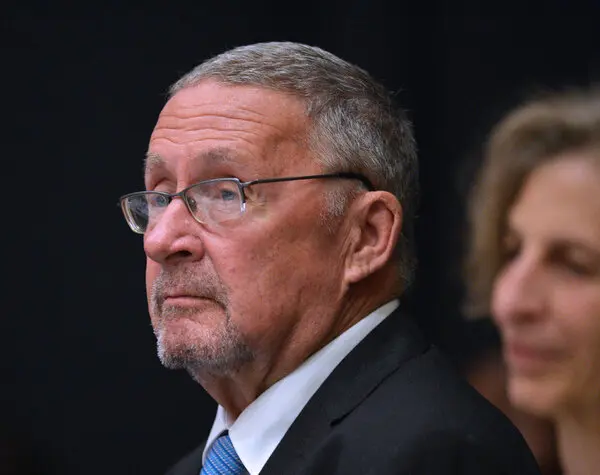
A white man born in colonial Northern Rhodesia to Scottish and English parents. A Cambridge-trained economist who chose farming in Zambia over life abroad. A commercial farmer who spent much of his political career championing ordinary Zambians. And a politician who would briefly occupy the country's highest office, only to discover that the Constitution would never allow him to seek it for himself.
With the passing of former Vice President and Acting President Guy Scott, Zambia has lost one of its most unconventional, controversial and intellectually distinctive political figures.
His death marks the end of a political journey unlike any other in the country's history.
The President Nobody Expected
When President Michael Sata died unexpectedly on 28 October 2014, Zambia entered uncharted territory.
As Vice President, Guy Scott was sworn in as Acting President, becoming Africa's first white head of state in more than two decades and Zambia's first white leader since independence in 1964.
The moment attracted headlines across the world.
For nearly three months, Scott presided over the country during one of its most sensitive political transitions. At a time when many African nations had experienced instability following the death of sitting presidents, Zambia demonstrated that constitutional succession could work peacefully.
But almost immediately after taking office, Scott discovered that holding power and being allowed to seek it were two very different things.
The Constitution That Stopped Him
Although Scott was legally entitled to serve as Acting President, he was constitutionally barred from contesting the January 2015 presidential election.
At the time, Zambia's Constitution required presidential candidates to have parents who were both Zambian by birth. Scott's parents had emigrated from Scotland and England long before independence.
The irony was extraordinary.
Guy Scott could become President.
But he could never ask Zambians to elect him President.
Supporters argued that the constitutional provision protected national sovereignty.
Critics said it unfairly excluded a man who had spent virtually his entire life in Zambia and had dedicated decades to public service.
Whatever one's view, Scott became the most prominent politician ever prevented from seeking the presidency by the very Constitution he had sworn to uphold.
The Battle That Changed Everything
If constitutional rules limited Scott's future, politics hastened his exit from the centre of power.
Following Michael Sata's death, the Patriotic Front descended into one of the fiercest internal succession battles in Zambia's political history.
Senior party figures fought openly over who would inherit Sata's political legacy. As Acting President, Scott attempted to keep government functioning while navigating an increasingly fractured ruling party.
He also sought to prevent ministers from using state resources during the PF leadership contest, a move that drew criticism from some within the party and intensified tensions with supporters of Edgar Lungu.
The succession battle quickly became bigger than Scott himself.
Although he remained Acting President until a new Head of State was elected, his influence inside the Patriotic Front steadily diminished as rival factions consolidated power.
When Edgar Lungu won the January 2015 presidential election, Scott peacefully handed over power in accordance with the Constitution.
It would prove to be the beginning of his political isolation.
From King's Palace to Political Exile
For years, Guy Scott had been one of Michael Sata's closest confidants and among the architects of the Patriotic Front's rise from opposition movement to governing party.
After Lungu assumed office, however, Scott found himself increasingly sidelined.
The man who had briefly occupied State House became a marginal figure within the very party he had helped build.
His outspoken nature and independent streak often placed him at odds with the new leadership, and his influence steadily faded. In later years, he became an outspoken critic of the PF administration before eventually expressing support for President Hakainde Hichilema and the UPND after the 2021 elections.
It was a remarkable political journey—from one of the founding faces of the PF to one of its most prominent former insiders.
A Politician Who Refused to Sound Like One
Scott's legacy was never defined solely by the offices he held.
He became known for something increasingly rare in politics: saying exactly what he thought.
He often spoke with blunt honesty, sharp humour and little regard for political convention.
Whether discussing race, corruption, agriculture or governance, Scott frequently produced headlines simply because he refused to filter his opinions.
To supporters, he was refreshingly candid.
To critics, he was unpredictable.
Even those who disagreed with him often admitted he brought an intellectual depth and originality rarely seen in modern politics.
More Than a Symbol
Long before becoming Acting President, Scott had already left his mark on Zambia.
First elected to Parliament in 1991, he served as Minister of Agriculture, where he earned a reputation as a thoughtful policymaker with a deep understanding of farming and rural development.
In 2011, he became Vice President under Michael Sata, helping steer the Patriotic Front through one of the most transformative periods in its history.
Yet perhaps his greatest contribution was not a policy, a law or a speech.
It was helping preserve constitutional order during one of Zambia's most uncertain moments.
When President Sata died, many feared instability.
Instead, government continued to function.
Power transferred peacefully.
An election was held.
A new president was sworn in.
Scott demonstrated that institutions—not personalities—could guide a nation through crisis.
The Legacy of a Political Paradox
History will remember Guy Scott for many things.
He was the economist who became a farmer.
The white Zambian who rose to the nation's highest office.
The Acting President who could never contest the presidency.
The founding Patriotic Front leader who was eventually pushed to the political margins.
The outspoken politician who never quite fit the mould.
His life was filled with contradictions, but perhaps that is what made him so fascinating.
He challenged assumptions about race, leadership and belonging in post-independence Africa. He proved that patriotism is not always measured by ancestry, and that democracy is often shaped as much by constitutional rules as by elections themselves.
History will remember Guy Scott as the man who briefly occupied Zambia's highest office without ever being allowed to ask voters to keep him there.
Few leaders have embodied the paradoxes of democracy quite like the white president who could never be elected.
Stay with MUVI
Follow our reporting wherever you are