
Diaspora
US Visa Restrictions Explained: What Zambians Need to Know Before Applying
By Muvi TV News Desk·August 2, 2026
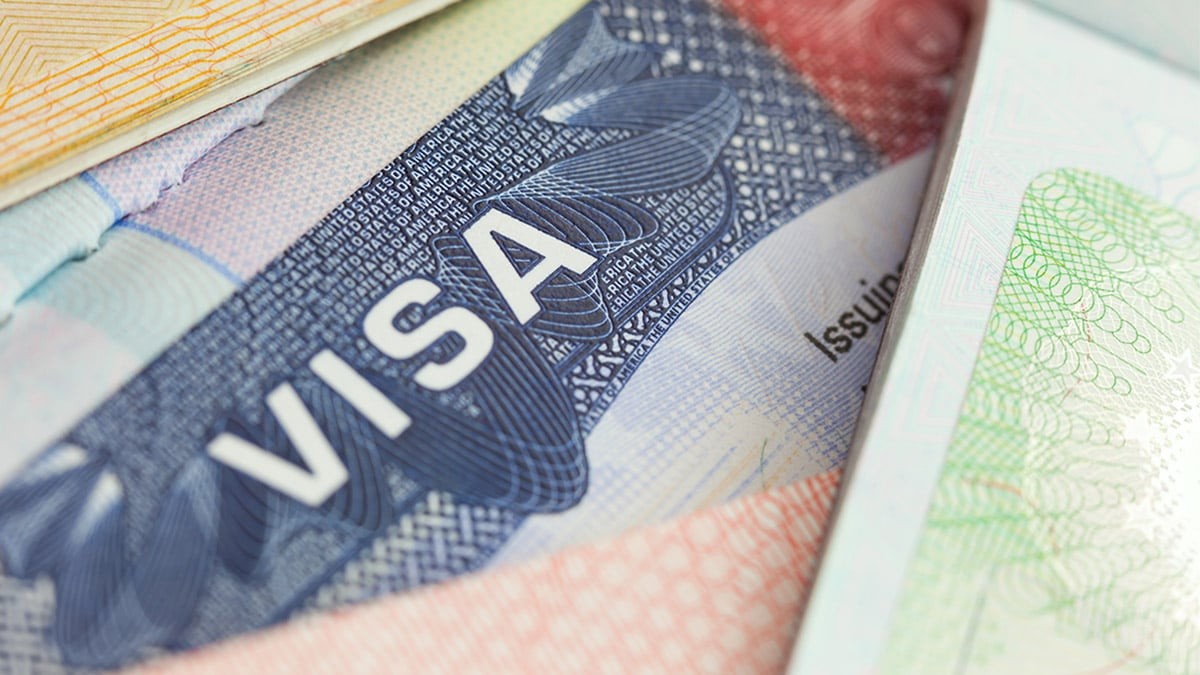
Zambians applying for a US visa today face a tougher process than at almost any point in recent years, the result of two overlapping restrictions introduced by Washington since August 2025. Here is what has changed, and what applicants actually need to do about it.
WHAT HAS CHANGED
The first restriction is a visa bond. Since 20 August 2025, Zambia has required B1/B2 visitor visa applicants who are otherwise found eligible to post a refundable bond before their visa is issued. Zambia and Malawi were the first two countries subjected to this rule, which has since expanded to 50 countries.
The US State Department confirmed in late July 2026 that the bond programme is now permanent, and raised the maximum bond amount from $15,000 to $20,000. The consular officer decides at the interview whether a bond is required and how much, and the money is refunded if the visa is denied, or if it is approved and the traveller complies with their visa terms.
The second, more sweeping restriction is a partial travel ban. Under Presidential Proclamation 10998, which took effect on 1 January 2026, Zambia is one of 20 countries subject to a partial suspension of visa issuance, alongside Angola, Nigeria, Tanzania, Zimbabwe, Malawi and others.
For these countries, immigrant visas are suspended with only narrow exceptions, and nonimmigrant B1/B2 visitor visas, along with F (academic student), M (vocational student) and J (exchange visitor) visas, are also subject to restriction, including a requirement that consular officers reduce visa validity to the shortest period permitted by law.
The State Department has cited Zambia's recorded visa overstay rate, 10.73 percent for B1/B2 travellers according to the underlying report, as the basis for its inclusion. Zambia is not on the separate list of 19 countries facing a full travel ban, which includes nations such as Afghanistan, Iran, Somalia and Syria.
The third restriction is the newest, and the most disruptive for how Zambians actually apply. From 1 August 2026, the US Embassy in Lusaka stopped processing routine visa applications altogether, part of a State Department restructuring that cut the number of visa-processing posts across Africa from roughly 50 to 20.
Zambia's Ministry of Foreign Affairs and International Cooperation confirmed in a press statement dated 30 July 2026 that it had been formally notified by the US Embassy that routine immigrant and non-immigrant visa services for Zambian nationals and residents will now be processed through the United States Consulate General in Johannesburg, South Africa.
WHO IS STILL EXEMPT
The restrictions are not retroactive. Zambians who already held a valid US visa before 1 January 2026 are not affected, and any visa issued before that date has not been revoked. Zambian lawful permanent residents of the US, green card holders, can continue to travel and re-enter, though they may face closer questioning at the border.
Anyone who was already physically present in the United States on 1 January 2026 also falls outside the proclamation's reach. Special Immigrant Visas for former employees of the US government are separately exempted.
WHAT TO DO IF YOU ARE APPLYING NOW
The practical process has just changed in a significant way. As of 1 August 2026, the US Embassy in Lusaka no longer processes routine visa applications.
Zambia's Ministry of Foreign Affairs confirmed the change in a press statement dated 30 July 2026, saying it had been formally notified by the US Embassy that both immigrant and non-immigrant visa services for Zambian nationals and residents will now be handled by the United States Consulate General in Johannesburg, South Africa.
The Embassy in Lusaka is not closing. The Ministry clarified it will continue to provide consular services to US citizens, diplomatic visa services, official visa services, and limited non-immigrant visa services in cases the United States deems to be in its national interest. But for the ordinary tourist, student, business or immigrant visa application, Zambians will need to work through Johannesburg rather than Lusaka going forward.
The Ministry said it is still engaging the US Embassy to better understand the operational arrangements and has advised applicants with pending applications or scheduled appointments to follow guidance issued directly by US authorities and to consult official US government channels for information on appointment scheduling, fee payments and application procedures, rather than relying on second-hand information.
Start with the DS-160 form, the standard online nonimmigrant visa application, available at ceac.state.gov/genniv. Every question must be answered, including writing "none" where nothing applies rather than leaving fields blank; an incomplete or incorrect form will be returned and requires booking an entirely new interview appointment.
Applicants must bring a printed DS-160 confirmation whose barcode number, beginning with "AA," matches exactly the one used to book their interview appointment, finalised at least three business days before the interview date.
The MRV visa fee is payable in Zambian Kwacha at any Zanaco bank branch, after which applicants can create an account on the official appointment website and book an interview slot, now in Johannesburg rather than in Lusaka.
Given the added step of travelling to South Africa for the interview itself, applicants should expect the process to take longer and cost more than before, and should start planning well ahead of any travel date, including budgeting for the trip to Johannesburg itself. Immigrant visa applicants must additionally complete a medical exam with an approved physician before their interview, and should gather every required original document at least a week in advance.
At the interview, no electronics are permitted inside the visa section. If a consular officer approves a B1/B2 visa and determines a bond applies, they will explain the amount and payment process on the spot.
Applicants required to pay a bond must also travel to and depart the United States exclusively through a specific list of designated airports, including New York's JFK; failing to do so can be treated as non-compliance with the bond's terms even after a visa has been issued.
Zambians already in the United States on certain visa categories should also be aware that US Citizenship and Immigration Services has placed a hold on pending benefit applications, such as OPT work authorisation and change-of-status requests, for nationals of countries covered by the proclamation, pending a security review, and is re-reviewing benefits already granted since January 2021.
THE BOTTOM LINE
None of this means a Zambian cannot get a US visa. Tourist, student and work visa categories remain open in principle, and the exemptions for existing visa holders and green card holders are real.
But applicants should budget more time, expect closer scrutiny, prepare for the possibility of a bond of up to $20,000 on top of standard fees, and build in months rather than weeks before any planned travel date.
Stay with MUVI
Follow our reporting wherever you are