
What Actually Gets Handed Over During Inauguration
·September 1, 2026
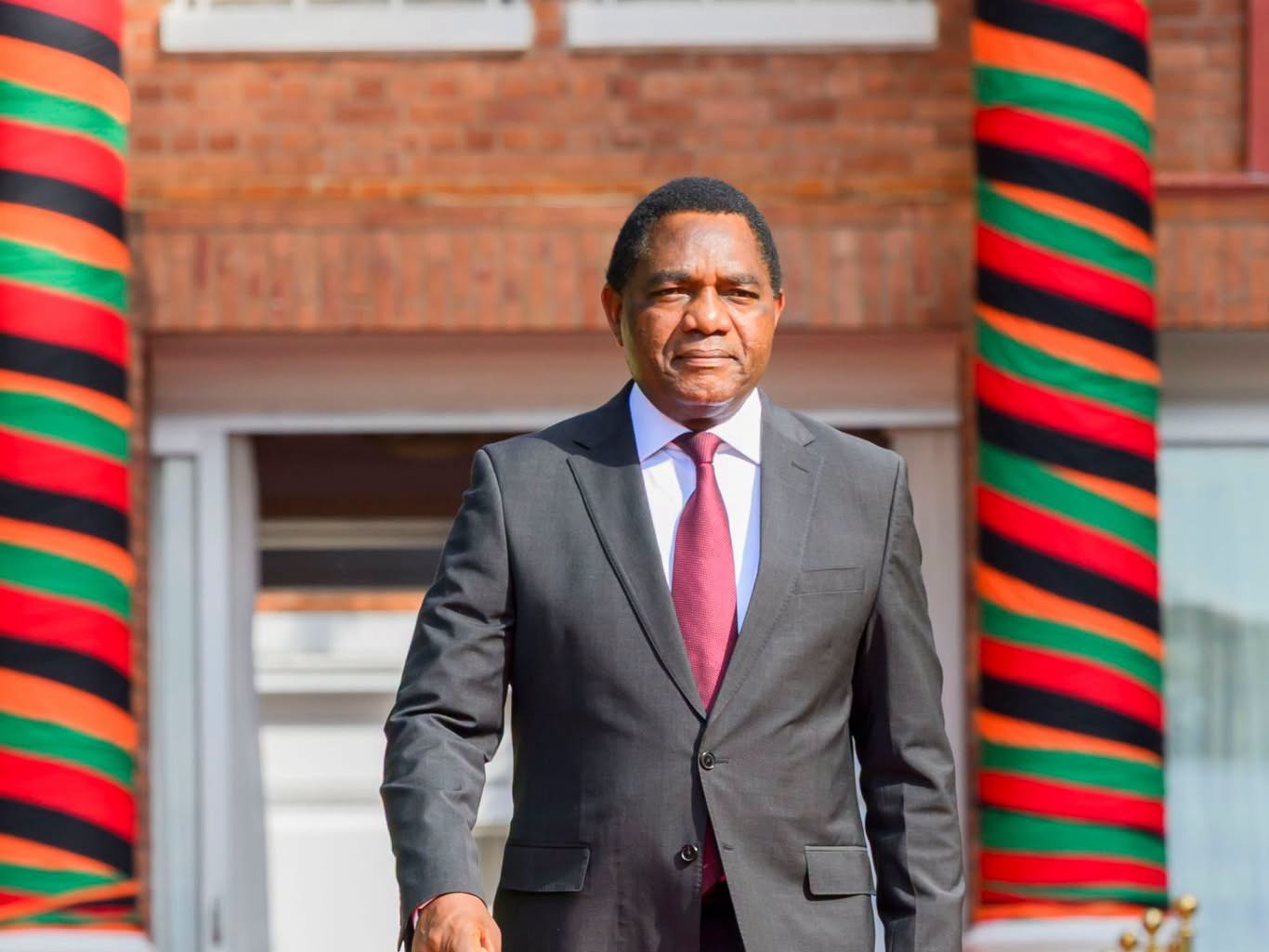
Today, as President Hakainde Hichilema is sworn in for his second term at National Heroes Stadium, the moment most Zambians will watch for is the oath itself, the raised hand, the words repeated after the Chief Justice. But the ceremony's real legal weight arrives seconds later, in a quieter, less-photographed exchange that Zambian law treats as seriously as the oath: the physical handover of what are formally called the instruments of power and authority.
WHAT ACTUALLY GETS HANDED OVER
Zambia's Transitional Period and Inauguration of President Act of 2016 dedicates an entire section, Section 16, specifically to this handover, titled "Handing over of instruments of power and authority," and requires the outgoing president to hand these items to the incoming president immediately after the oath is administered. It is not ceremonial flourish improvised on the day; it is a statutory requirement.
At Zambia's most recent documented handover, in 2015, when Edgar Lungu was sworn in, the instruments passed to him were the Zambian flag, the National Coat of Arms, and the Republican Constitution itself, handed over that day by then-Acting President Guy Scott. Each carries distinct symbolic weight. The flag represents the nation the president now leads and, in that handover, the continuity of the state itself, regardless of who occupies the office. The Coat of Arms, Zambia's official heraldic emblem, functions as the visual seal of government authority, the mark that appears on official documents, currency and state correspondence, signifying that whatever bears it carries the authority of the Zambian state. The Constitution is, in some ways, the most pointed symbol of all: handing a new president the physical document that limits and defines their own power, at the exact moment they receive that power, is a deliberate statement that the presidency is bound by law from its very first second in office, not before it and not above it.
NOT TO BE CONFUSED WITH THE OATH ITSELF
It is worth separating two distinct elements of the ceremony that are easy to conflate. The oath of office, administered by the Chief Justice, or the Deputy Chief Justice in their absence, a role MUVI has explored in a separate explainer this week, is typically sworn on a holy text such as the Bible, reflecting the personal, moral dimension of the promise being made. The instruments of power, by contrast, are handed over afterward, and represent something more institutional: not a personal vow, but the physical transfer of the tools and symbols of state authority from one office-holder to the next. Zambia's law treats these as two separate legal moments within the same ceremony, the oath under Section 15 of the Act, the instruments handover under Section 16.
A REGIONAL TRADITION, NOT A ZAMBIAN INVENTION
Zambia is far from alone in this practice. Uganda's own presidential inaugurations follow an almost identical structure: at President Museveni's most recent swearing-in, the Chief Justice handed over the Constitution of Uganda, the National Flag, the National Coat of Arms and the Public Seal, with some accounts adding the presidential standard flag and even ceremonial instruments of national defence, a sword and shield presented separately by the military. Kenya's tradition adds its own distinctive touch: alongside the constitution, an incoming president receives a ceremonial ivory-handled sword, a tradition tracing back to Japanese dynastic ceremony by way of British colonial protocol, with the accompanying 21-gun salute marking the same moment. Across the region, the specific objects vary, but the underlying idea does not: power in a modern constitutional democracy is not simply claimed, it is formally, physically conferred, witnessed by dignitaries, and grounded in a document that existed before the new leader and will outlast their term.
WHAT TO WATCH FOR TODAY
When Hichilema completes his oath this afternoon, the cameras will likely linger longest on the applause. But watch for the quieter exchange that follows, the flag, the seal, the Constitution, passing from one set of hands to another. It is the moment Zambian law actually considers most important: not simply that a man has promised to lead, but that the nation's own symbols of authority have been formally, lawfully placed in his keeping.
Stay with MUVI
Follow our reporting wherever you are