
Zambia's Election Exposed a Divide That Is Getting Harder to Ignore
·August 25, 2026
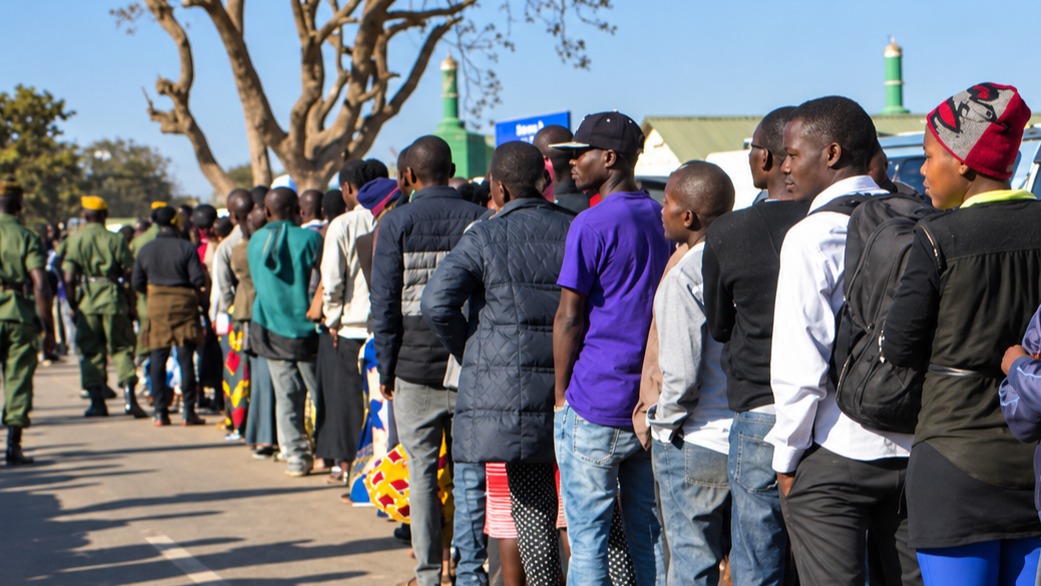
Zambians went to the polls on 13 August in a country that, five years ago, had just delivered one of Africa's more celebrated democratic moments: a peaceful, youth-driven transfer of power that outside observers held up as a model. This time, the same electoral process has left a very different impression, one of a country whose divisions, geographic, institutional and now increasingly personal, are not fading but hardening.
THE MAP ITSELF TELLS THE STORY
Start with where the votes actually came from. Pre-election polling and post-election returns both describe a country voting in blocs rather than as a whole: UPND support concentrated heavily in Southern, Western and North-Western provinces, with projected and actual vote shares in the 60s and 70s percent range, while NRPUP built its strongest numbers in Eastern, Luapula, Northern and Muchinga. Lusaka and Copperbelt, Zambia's urban centres, were the genuine swing territory, decided by single-digit margins in some pre-election projections. This is not a new pattern. Academic research on Zambian voting behaviour going back over a decade has documented a durable tendency for citizens to vote along ethno-regional lines, with UPND and PF, and now UPND and the Tonse-Pamodzi Alliance, each effective at mobilising a core ethnic base rather than building genuinely national coalitions.
What is new is how directly that pattern was built into the map itself. Zambia's 2026 election was the first conducted under an expanded National Assembly, growing from 156 to 226 directly elected constituencies. Analysts have pointed out that the delimitation exercise added nine new seats in Southern Province, Hichilema's traditional stronghold, and nine new seats in Eastern areas considered Mundubile's base, a symmetry critics argue did not so much rig the total number of seats as lock in, and arguably deepen, the country's existing regional voting blocs. Rather than a national map that might encourage parties to compete for the same voters everywhere, Zambia now has a legislature whose boundaries mirror, and in places sharpen, its regional political geography.
A TRUST GAP AS WIDE AS THE VOTE GAP
Perhaps the starkest evidence of division is not geographic at all, but attitudinal. A pre-election survey by the Zambia Election Research Network found that while 62 percent of UPND supporters expected the 2026 election to be "completely free and fair," only 36 percent of opposition party supporters agreed, a 26-point gap in basic confidence in the process before a single vote had been cast. That gap has not narrowed since results were declared. It has, if anything, calcified into two largely irreconcilable accounts of what actually happened during the count, MUVI has reported extensively on the competing narratives surrounding the 14 August results suspension, the Kabulonga security operation, and the death of former minister Mutotwe Kafwaya, with government and opposition supporters often unable to agree on the most basic facts of the same events, let alone their interpretation.
Mundubile himself framed the stakes in exactly these terms before the vote was even held, telling reporters that an opposition victory would need to begin with "a national reset" in a country he described as deeply divided. "There's very little development you can do with a divided country," he said. Whatever one makes of his own role in the disputed aftermath, that specific diagnosis has proven difficult to dispute.
INSTITUTIONS ARE NOTICING TOO
The unease is no longer confined to political rhetoric. In the days since the election, Zambia's three largest church bodies, the Council of Churches in Zambia, the Evangelical Fellowship of Zambia and the Zambia Conference of Catholic Bishops, issued a joint pastoral statement warning against content that "seeks to divide Zambians along political, regional, ethnic, generational or other lines," a warning MUVI reported on separately. The Law Association of Zambia and the Foundation for Democratic Process have both raised formal concerns about the transparency of the post-election period. Two opposition politicians, from different parties, announced their retirement from politics within 48 hours of each other, one explicitly citing an environment he called "too toxic, too intolerant, and even dangerous." A newly elected councillor, from the party that produced the losing presidential candidate, separately warned that Zambian democracy "is shrinking" because speaking out now makes a person "a target."
None of this means Zambia is a country on the edge of the ethnic violence seen elsewhere on the continent. Independent assessments, including the Bertelsmann Transformation Index, continue to describe Zambia as "a comparatively open and tolerant country" where, despite ethnicity's real role in political competition, violent ethnic conflict remains rare. The Council on Foreign Relations noted this week that the 2026 election, whatever its problems, has not produced the kind of breakdown seen in some regional peers. That distinction matters, and it is worth holding onto.
But it is also true that the specific ingredients of division, a voting map that increasingly rewards mobilising a base rather than building consensus, a trust gap so wide that supporters of opposing parties cannot agree on whether the process itself was fair, and now a security and political crisis in which even institutions built for reconciliation, the churches among them, feel compelled to publicly intervene, are all more visible after this election than they were after the last one. Zambia has weathered divided elections before. What this one has made harder to ignore is how much wider that divide has become, and how many of the country's own institutions are now saying so out loud.
Stay with MUVI
Follow our reporting wherever you are