Business
Zambia Begins Talks With IMF Over Successor Programme Focused on Growth and Jobs
·September 30, 2026
by Saviour Simulindi
Zambia has begun discussions with the International Monetary Fund over a new Extended Credit Facility programme, as Government seeks to move its relationship with the Fund from an emphasis on economic stabilisation towards investment, exports, economic diversification and job creation.
An IMF mission led by Mission Chief Edward Gemayel has begun meetings with the Ministry of Finance and National Planning, with discussions scheduled to continue through October 10. The mission is expected to engage the Bank of Zambia, Zambia Revenue Authority and other public institutions, with Zambia's 2027 National Budget and 2027–2029 Medium-Term Budget Plan among the issues expected to form part of the discussions.
The negotiations come only months after Zambia completed its previous IMF-supported programme. The 38-month Extended Credit Facility arrangement was initially approved in August 2022 for SDR978.2 million, then worth approximately US$1.3 billion. The programme was subsequently expanded, and by its completion in January 2026 Zambia had received SDR1.27 billion, or roughly US$1.7 billion.
The previous programme was largely designed around a Zambia emerging from sovereign default. It focused on restoring fiscal and debt sustainability, rebuilding economic stability, strengthening governance and protecting priority social spending while the country negotiated the restructuring of its external debt. The IMF described performance under the programme as "broadly satisfactory," although implementation was not perfect: some structural benchmarks were completed late, while a quantitative target on net international reserves and an indicative target on arrears clearance were missed at one stage.
The proposed successor programme would begin from a different economic position. Rather than concentrating primarily on stabilisation and debt restructuring, Government says it wants the next phase to maintain that stability while creating the conditions for substantially stronger economic growth.
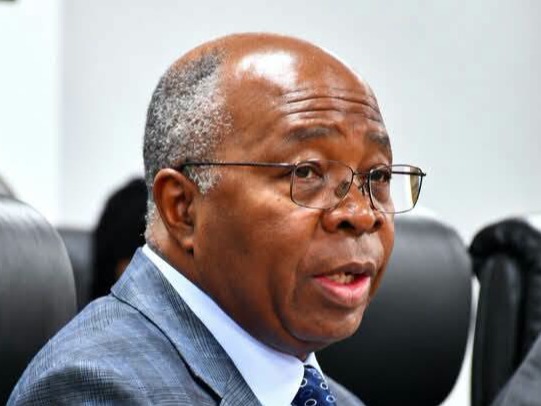
"The focus now, over the next five years, is to maintain fiscal stability, macroeconomic stability, with a lot of bias towards growth," Finance and National Planning Minister Situmbeko Musokotwane told the IMF mission.
Dr Musokotwane said employment, particularly among young Zambians, remained one of the country's major challenges and argued that higher levels of investment would be necessary if Zambia was to generate enough jobs and raise incomes. Government's strategy, he said, would be built around four broad areas: export-led growth, foreign direct investment, human capital development and improvements to the regulatory and governance environment.
The emphasis on exports reflects one of the structural limitations Zambia has struggled with for decades. With a relatively small domestic market, Government argues that significantly faster growth will require Zambian businesses to sell more goods and services beyond the country's borders. Dr Musokotwane pointed to export-oriented economies including Germany, Japan and countries in Southeast Asia as examples of how external markets can provide demand beyond what a country's own population can generate.
Foreign direct investment is expected to form another major part of that strategy. Dr Musokotwane said Government intended to make a more deliberate case to Zambians about the importance of foreign capital, technology and international market access in accelerating economic development. That approach also explains the administration's increasing emphasis on economic diplomacy and direct engagement with international investors.
But another IMF programme would still come with constraints. The Fund has repeatedly emphasised that Zambia must maintain fiscal discipline, strengthen domestic revenue mobilisation, improve governance and ensure that its debt remains sustainable. In May, following an earlier mission to Lusaka, the IMF said Zambia had made "substantial progress" in restoring macroeconomic stability but warned that tangible revenue gains remained necessary to reduce the Government's domestic interest burden and bring debt to a moderate risk of distress.
That earlier mission had already begun laying the groundwork for the negotiations now taking place. The IMF said in May that discussions on a successor programme had advanced but would resume with the government formed after Zambia's August elections. It identified private-sector-led growth, diversification, productivity, copper value addition, energy supply, agriculture, tourism and textiles among areas that could support the next phase of Zambia's economic transformation.
The Fund also highlighted a tension that will likely feature prominently in the negotiations: Zambia wants substantially more investment and economic growth, but Government must simultaneously avoid rebuilding the fiscal and debt vulnerabilities that contributed to the country's previous crisis.
That means the next programme, if agreed, would not simply represent another injection of IMF financing. It would establish a new set of economic policies, reforms and targets against which Zambia's performance would be periodically reviewed before programme disbursements could proceed.
There is not yet a new programme. The current meetings are negotiations, and the size, duration, financing envelope and detailed conditions of any successor arrangement have not yet been announced.
What is clear is that both sides have been preparing for one for several months.
The first IMF programme was largely about helping Zambia restore stability after default and debt distress. The central question surrounding the second will be whether that stability can now be converted into something ordinary Zambians can see more directly: investment, businesses, exports, higher incomes and jobs.
The IMF mission is expected to continue discussions with Government institutions through October 10.
Stay with MUVI
Follow our reporting wherever you are