Politics
At 79, She Holds the Pen That Will Make Zambia's Next President Official
By Muvi TV News Desk·August 16, 2026
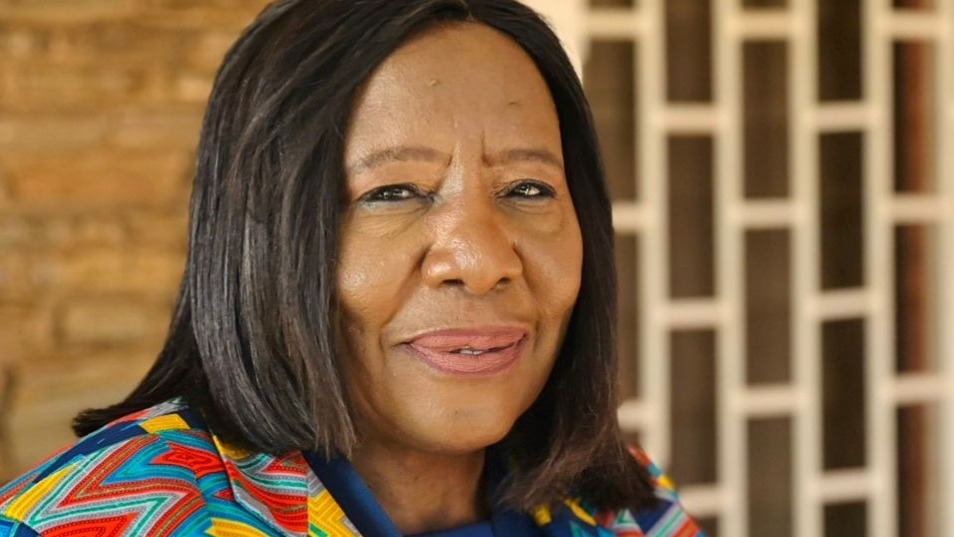
There is a particular kind of job in Zambian public life that offers little reward for success and considerable risk for failure. For the past three years, that job has belonged to Mwangala Zaloumis, Chairperson of the Electoral Commission of Zambia, the woman whose signature will ultimately certify who governs the country for the next five years.
This is the first in a MUVI series profiling the five people, four confirmed, one seat apparently vacant, currently entrusted with administering Zambia's elections.
A CAREER BUILT INSIDE THE LAW
Zaloumis, born in Western Province in May 1947, making her 79 during this election, is a lawyer by training and temperament. She holds a Bachelor of Laws from the University of Zambia, alongside a postgraduate diploma in social work and a certificate in contract negotiation and project procurement from a Washington-based institute.
Her professional life, by the Commission's own account, spans 32 years as Senior Counsel in Zambia's judicial courts, a career that placed her repeatedly at the centre of the country's constitutional life rather than at its edges.
She chaired Zambia's Electoral Reforms Committee, whose recommendations were later folded into the country's democratic governance framework.
She served as spokesperson and a member of the National Constitutional Conference that drafted a new Zambian constitution between 2007 and 2010, and later sat on the Technical Committee that produced the constitution actually enacted in 2016, the same document that today governs the election she is now overseeing.
Between 2003 and 2007, she chaired the Energy Regulation Board, giving her prior experience running a national regulatory institution before she ever arrived at the ECZ. In 2021, she was recognised among 100 women across Africa honoured as "Courtroom Mail" for her record in the courts.
THE APPOINTMENT
President Hakainde Hichilema appointed Zaloumis ECZ Chairperson in November 2022, alongside Ali Simwinga as her deputy at the time, replacing Justice Esau Chulu. Chulu's own departure carries a pointed history: appointed by former President Edgar Lungu, Chulu was the Returning Officer who declared Hichilema the winner of the 2021 presidential election, a declaration that effectively ended his own boss's presidency.
His contract as ECZ Chairperson was not renewed by the incoming administration and lapsed in June 2022.
Whether that was routine transition or consequence remains, as one Zambian outlet put it, an open question, but the sequence is not lost on anyone who has held the job since: under the 2016 constitutional framework, the ECZ Chairperson is legally the Returning Officer for presidential elections, meaning Zaloumis's signature, not any court's or any party's, is what will make Zambia's next president official.
A ROLE UNDER STRAIN, AND UNDER SCRUTINY
Zaloumis now finds herself managing the most consequential and, this year, most turbulent count in the Commission's recent history.
She has spent this election cycle as its most public face: announcing the delimitation of 70 new constituencies in April, defending the Commission's contested guidance on how ballots may be marked days before polling, opening the National Election Results Centre, and, on 14 August, presiding over the Commission's decision to suspend counting nationwide after reports of violence against polling officials and theft of ballot papers, a suspension MUVI reported on as it unfolded and which drew direct concern from four separate international observer missions.
The composition of the Commission she chairs has itself become a live controversy. In September 2025, Zambian academic Sishuwa Sishuwa petitioned the President over what he called the "unconstitutional composition" of the ECZ, noting that three of its four commissioners, including Zaloumis herself, are drawn from Western Province, leaving eight of the country's ten provinces without a single representative on the body responsible for administering their votes.
The petition also noted the Commission includes no one under 35 and no person with a declared disability, both categories the Constitution's national values provisions call on public institutions to reflect.
MUVI has not established whether the fifth commissioner seat referenced in the Constitution remains formally vacant or has simply not been publicly disclosed, and has sought clarification from the Commission.
For now, Zaloumis remains the person Zambians are watching most closely as the country waits for a final, credible result, a position her predecessor's own history suggests carries real professional risk regardless of how the process concludes.
Stay with MUVI
Follow our reporting wherever you are