Politics
It's One of the 20th Century's Great Unsolved Mysteries, and the Reason This Constituency Is Called Dag Hammarskjöld
By Muvi TV News Desk·August 16, 2026
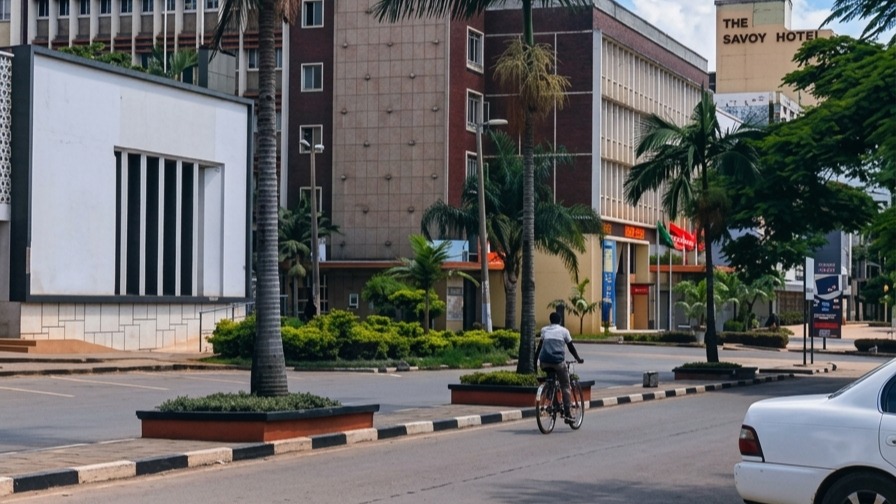
Among the 70 new constituencies created ahead of Zambia's 2026 general election is one whose name has nothing to do with a local chief, ward or landmark in the usual sense: Dag Hammarskjöld, covering Twapia, Kaniki and the Dag Hammarskjöld area of Ndola District.
On Thursday, it delivered one of the tightest results of this election, with NRPUP's Ezra Tembo declared MP-elect after polling 5,320 votes against UPND's Ernest Lufunda's 5,294, a margin of just 26 votes.
But the name itself carries far more history than most of the country's newer constituencies, tracing back to one of the 20th century's most enduring unsolved mysteries.
A UN CHIEF, A CONGO CRISIS, AND A MIDNIGHT CRASH
Dag Hammarskjöld was the second Secretary-General of the United Nations, serving from 1953 until his death in 1961.
In September that year, he flew into the region on a peace mission tied to the Congo Crisis, travelling to Ndola, then in the British colonial territory of Northern Rhodesia, to meet Moïse Tshombe, leader of the breakaway Congolese province of Katanga, in an attempt to negotiate an end to the secession and the wider conflict engulfing the newly independent Congo.
Shortly after midnight on 18 September 1961, the chartered DC-6 aircraft carrying Hammarskjöld, the Albertina, crashed in dense forest roughly 14 kilometres from Ndola airport as it approached to land.
All 15 others aboard, UN staff and the Swedish crew, died on impact; a sole survivor died of his injuries six days later. Hammarskjöld was 56. He was posthumously awarded the Nobel Peace Prize later that year.
A MYSTERY THAT HAS NEVER FULLY CLOSED
What happened that night has never been definitively settled. Initial inquiries by Rhodesian colonial authorities attributed the crash to pilot error, but the UN's own 1962 Commission of Investigation found that sabotage could not be ruled out, a conclusion that has fuelled speculation and formal re-investigation ever since.
Researchers and witnesses have pointed to a string of unexplained details: search efforts for the wreckage, just a few miles from the airport, did not begin for around 15 hours despite witnesses reporting a flash in the sky soon after midnight; local residents said they saw a second aircraft in the sky that night, testimony that colonial authorities largely dismissed; and Hammarskjöld's surviving bodyguard reportedly said, before he too died of his injuries, that the plane had "blown up."
Historian Susan Williams reopened the case in her 2011 book Who Killed Hammarskjöld?, drawing on previously unseen documents and eyewitness testimony, much of it from African witnesses whose accounts colonial inquiries had dismissed or disqualified at the time.
Congo's prime minister at the time of the crash, Cyrille Adoula, believed Hammarskjöld had been murdered, and pointed to Western financial interests in the Katanga region's mineral wealth as a motive.
The United Nations has periodically reopened its own investigation in the years since, appointing Tanzanian jurist Mohamed Chande Othman to lead a renewed inquiry that, in 2019, reported that the United States and Britain were withholding relevant information. The UN General Assembly has repeatedly voted, by consensus and with the backing of more than 100 countries, to keep that investigation open.
A separate 1993 inquiry commissioned by Sweden's foreign ministry ultimately concluded the most likely cause remained pilot error, and that verdict remains the official Swedish government position, even as competing theories, including claims of a mercenary-piloted attack aircraft, continue to circulate.
A ZAMBIAN LEGACY
The crash site, about 10 kilometres north of Ndola along the Ndola-Kitwe road, is today marked by a memorial park, one of the most visited historical sites in the Copperbelt.
Zambia and the United Nations have jointly marked the anniversary of his death on several occasions, including a 60th-anniversary commemoration in 2021 attended by senior UN and Zambian officials, with then-Copperbelt Minister Elisha Matambo describing Hammarskjöld's courage as a value government would continue to honour. A stadium in Ndola, once home to Ndola United Football Club, also carried his name before it was demolished in 1988.
The naming of the new Dag Hammarskjöld constituency, created as part of Zambia's 2026 boundary delimitation exercise, extends that legacy into the country's political map for the first time, turning a site forever associated with one of the Cold War's great unresolved mysteries into a piece of Zambia's everyday electoral geography, one that, as of this week, has already produced a result close enough to be remembered in its own right.
Stay with MUVI
Follow our reporting wherever you are