World
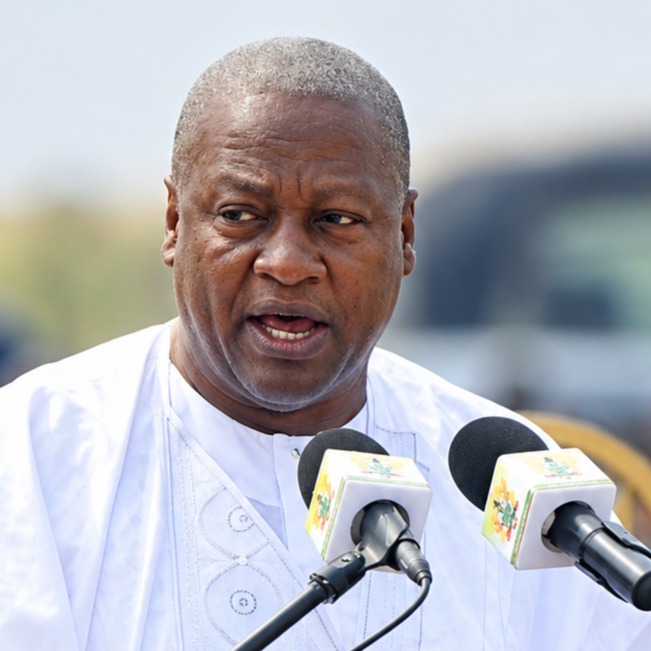
”It Was Humiliating" — Mahama Explains Why Ghana Rejected US Health Compact Meant to Replace USAID
By Muvi TV News Desk·September 29, 2026
When the United States offered Ghana a new health compact to replace funding lost after the withdrawal of USAID support, the country faced a difficult choice.
The proposed deal was worth just over $100 million over five years.
Ghana chose to walk away.
President John Dramani Mahama says the decision came down to concerns over what the agreement required Ghana to surrender in return for the funding, including access to sensitive health information and restrictions on the country's ability to regulate medical products.
Speaking at the Council on Foreign Relations in New York, Mahama said Ghana's Health Ministry first examined the compact before preparing a Cabinet Information Paper.
The document was then taken to Cabinet, where several provisions were flagged.
Among them, Mahama said, was a requirement for Ghana to provide the United States with its pathogen profile, information about diseases circulating in the country, as well as medical records.
"Who takes another country's medical records?" he asked.
The President also said the agreement required Ghana to contribute a specified amount of its own money to the programme.
But perhaps the most serious concern, according to Mahama, was a provision that would have prevented Ghana's Food and Drugs Authority from inspecting medicines and other medical products brought into the country under the programme.
For Ghana, that was more than a question of funding.
It was a question of who controls the country's health information, who protects its citizens and who has the final say over what enters its health system.
Mahama said Cabinet rejected the compact unusually quickly and instructed the Health Minister to inform the US Ambassador that Ghana would not proceed.
"We don't need it. We'll manage ourselves," he said.
The decision has wider significance because Ghana was not simply turning down a grant. It was rejecting a model of health cooperation that its government believed placed sensitive national information and regulatory authority at risk.
Independent reporting in April found that Ghana had rejected the proposed deal over concerns about sensitive health data. Ghana's Data Protection Commission said the proposed access went beyond what would typically be required and raised questions about governance and oversight of how the data could be used.
The proposed arrangement would have provided Ghana with about $109 million in US health assistance over five years, alongside additional financing from the Ghanaian government.
The dispute also comes at a time when Ghana is trying to rethink its dependence on external health financing.
Mahama has used the withdrawal of US assistance to push for greater African health self-reliance, including stronger local production of medicines and vaccines, research capacity and domestic financing.
The argument is not that Ghana does not need international partnerships.
It is that partnerships should not require a country to surrender control over information about its people or weaken institutions responsible for protecting them.
That distinction is becoming increasingly important as health systems become more dependent on digital records, disease surveillance and large databases.
Ghana's decision therefore speaks to a much bigger question facing African countries after decades of reliance on foreign health assistance.
Aid can save lives and strengthen health systems. But the terms attached to that assistance can also shape who controls data, regulation and national health priorities.
For Mahama's government, the answer was clear. The money could be replaced. Control over Ghana's health system, its citizens' information and its regulatory authority could not.
Stay with MUVI
Follow our reporting wherever you are