Politics
McDonald Chipenzi, the Civil Society Veteran Now Sitting Inside the System He Used to Watch
By Muvi TV News Desk·August 17, 2026
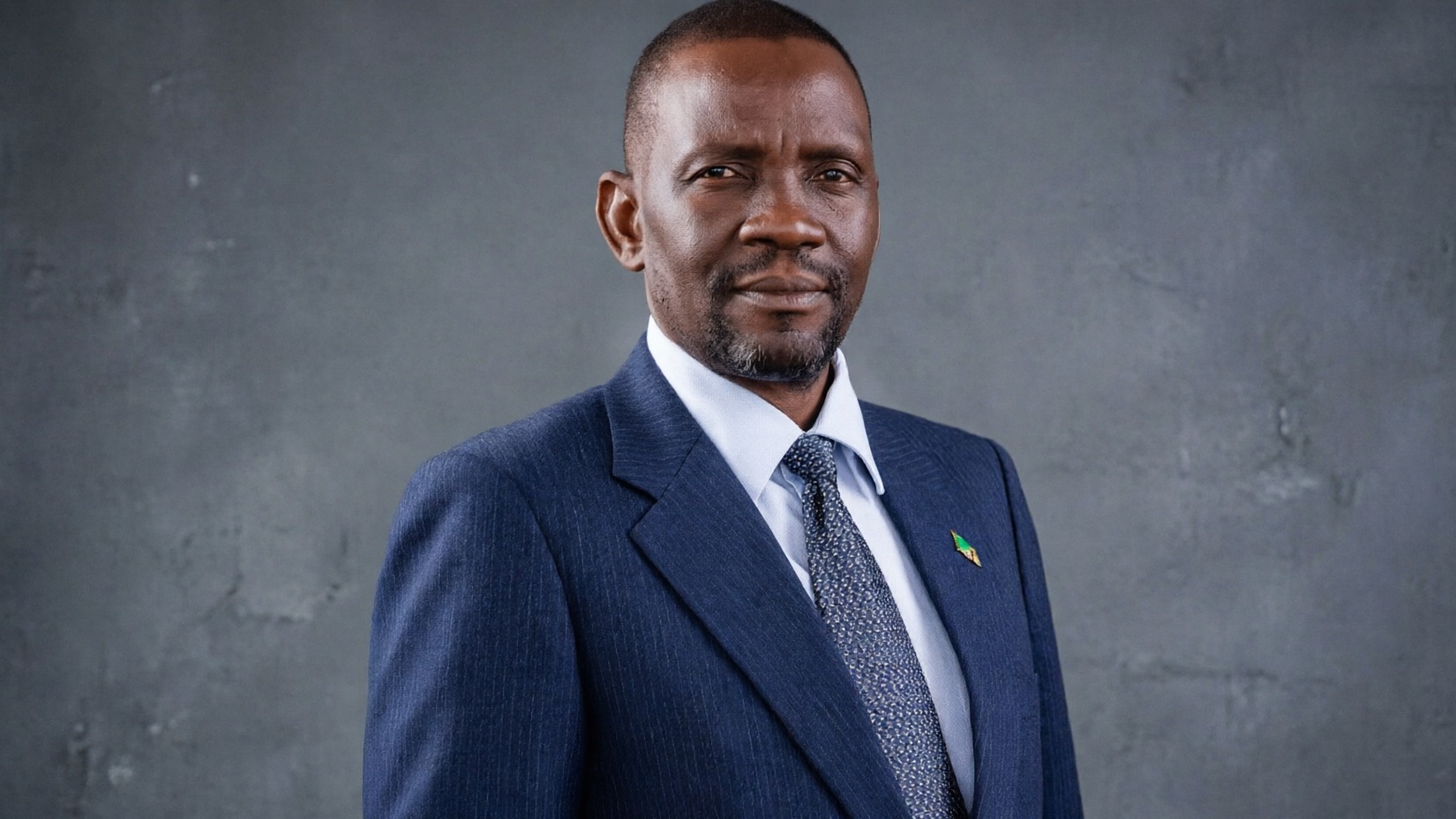
The second commissioner in MUVI's series on the people administering Zambia's elections spent most of his career on the outside of the institution he now helps run, as one of Zambia's most prominent election-monitoring and civil society figures, before becoming, in the eyes of at least one prominent critic, exactly the kind of insider he once watched closely.
FROM THE NEWSROOM TO THE WATCHDOG SEAT
Before he became a civil society figure, Chipenzi was a journalist. He worked as a reporter on the political desk at The Post, then Zambia's most widely read and most fiercely independent newspaper, under founding editor Fred M'membe, gathering news from around the country and filing it to the newsdesk.
By his own account, he was recognised as the most hardworking reporter in the paper's editorial department and went on to serve as secretary of its Productivity Committee before leaving the organisation.
The Post, known for its willingness to challenge successive Zambian presidents and eventually shut down in 2016 in what press freedom advocates called a politically motivated tax dispute, gave Chipenzi an early, formative education in exactly the kind of institutional scrutiny he would later apply as an election monitor, and now applies as a commissioner himself.
FROM WATCHDOG TO COMMISSIONER
McDonald Governor Chipenzi built the next phase of his career inside Zambia's election-monitoring and civil society ecosystem rather than in government or the courts, the path that shaped predecessors like ECZ Chairperson Mwangala Zaloumis.
According to the Commission's own biography, he worked first as a Research and Information Officer, later Executive Director, at the Foundation for Democratic Process (FODEP), one of Zambia's longest-running election observation bodies, before founding and leading Governance, Elections, Advocacy, Research Services Initiative Zambia, known as GEARS.
He also chaired the Council of Non-Governmental Organisations in Zambia, an umbrella body for the country's civil society sector. The Commission describes him as "a seasoned local and international election, human rights, civil society and governance expert," with formal training in human rights alongside his electoral work.
That background gave Chipenzi a public profile most ECZ commissioners never have. For years before his appointment, he was a familiar voice in Zambian media commenting on election conduct, civic space and governance, the kind of person journalists called for an independent take on how an election was being run, rather than someone inside the institution running it.
THE APPOINTMENT AND THE PUSHBACK
President Hakainde Hichilema appointed Chipenzi ECZ Commissioner in November 2022, in the same batch of appointments that made Zaloumis Chairperson and Ali Simwinga Vice Chairperson. Parliament's Select Committee scrutinised and ratified the appointment the following month, in December 2022, finding it had been made in accordance with the relevant laws.
Not everyone welcomed the choice. Ambassador Emmanuel Mwamba, a former Zambian diplomat and vocal government critic, published a column at the time headlined simply "Chipenzi, NO!", arguing that Chipenzi's record at GEARS and FODEP had "sufficiently demonstrated that he is a UPND surrogate" who had been "highly and openly partisan in many civic and national affairs."
Mwamba contrasted the appointment with what he called the more defensible choice of Zaloumis, a distinguished lawyer, arguing the Commissioner role should have gone to someone he considered more clearly neutral.
MUVI has not independently verified Mwamba's characterisation, and Chipenzi has not, to MUVI's knowledge, publicly responded to that specific column; his professional record at FODEP and GEARS, both established, internationally recognised election-monitoring bodies rather than party-aligned organisations, is separately a matter of public record.
WHAT HE'S SAID SINCE
In office, Chipenzi has positioned himself as a defender of the Commission's independence against exactly the kind of rigging concerns his critics raised about his own appointment. Speaking at a Transparency International Zambia anti-corruption conference in late 2025, he argued that Zambia's electoral history undercuts fears that a ruling party can engineer outcomes through commissioner appointments.
"History has demonstrated that ruling parties lost elections despite being responsible for appointing the commissioners," he said, drawing on what he described as his own experience studying electoral management bodies "not only in Africa but across the globe."
At the same event, he called on political parties to "tame their appetite for violence," and said the Commission would suspend an election where conditions genuinely warranted it, citing a prior, more limited suspension in Petauke as an example of the Commission acting on its own authority rather than under political direction.
A ROLE TESTED IN REAL TIME
Whatever view one takes of his appointment, Chipenzi now sits on the four-member Commission, alongside Zaloumis, Vice Chairperson Vincent Mukanda and Commissioner Ndiyoi Mutiti, that has spent the past week managing the most turbulent count in Zambia's recent electoral history: a nationwide suspension of results announcements on 14 August, competing declarations of victory, and a series of disputed security incidents MUVI has covered separately.
As a commissioner rather than the Chairperson, Chipenzi does not carry the same singular public accountability Zaloumis does as the presidential Returning Officer, but his presence on the Commission puts his own institutional credibility, built over two decades as an outside watchdog, on the line alongside everyone else's.
Stay with MUVI
Follow our reporting wherever you are