
Opinion
Other Cities Catch The Clean-Up Bug As Councils Move Street Vendors Into Markets
By Muvi TV News Desk·October 3, 2026
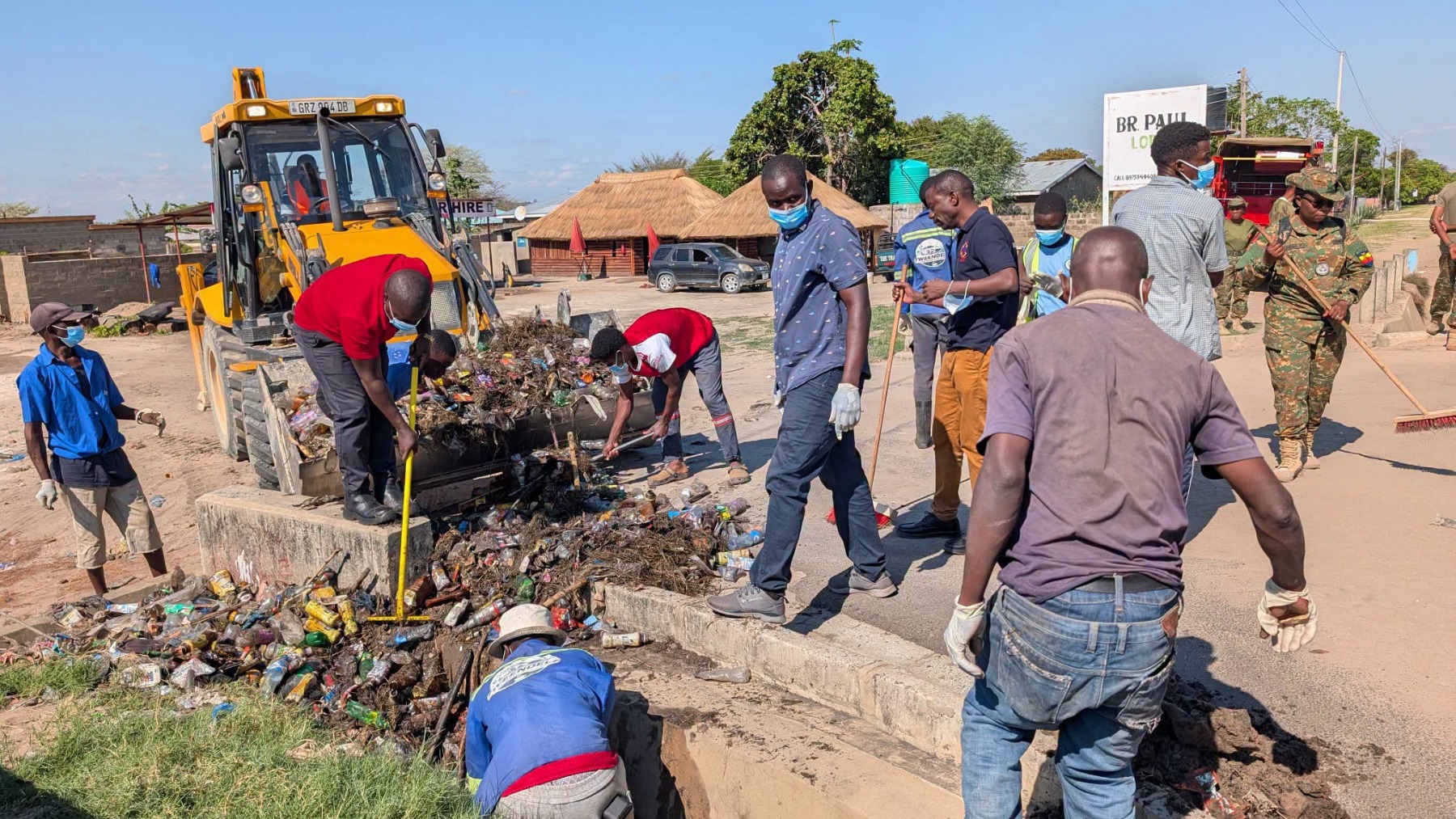
As Lusaka City Council began its most visible push in years to remove street vendors from undesignated trading areas on Saturday, similar efforts are taking shape elsewhere, with councils in Kabwe and Livingstone also directing vendors away from streets and back into designated markets.
The timing creates the appearance of a growing municipal clean-up movement, although the initiatives are being implemented independently and should not necessarily be understood as councils simply copying Lusaka.
In fact, Kabwe announced its October 1 deadline before Lusaka's October 3 enforcement operation began.
What the councils increasingly share is the language being used to justify the measures: cleanliness, order, pedestrian access, public health, waste management and the need to return informal trading to designated spaces.
In Lusaka, that effort moved into full enforcement on Saturday morning.
Lusaka City Council, working with the Zambia Police Service, began Operation Clear Path at around 06:00 hours, removing street vendors from six major roads and locations in the Central Business District. The affected areas include Lumumba Road, Freedom Way, Cha Cha Cha Road, Cairo Road and Ben Bella Road, as well as areas around FINDECO House and Kafue Roundabout.
Mayor Chitambala Mwewa said traders removed from the CBD would be allocated trading spaces in designated markets and insisted the exercise was not intended to punish people earning a living but to create a safer, cleaner and more orderly system of trade.
The council says the operation will continue until illegal street vending has been removed from the affected streets.
Public health has also become part of the argument. Ahead of Saturday's operation, Mr Mwewa said street vending combined with indiscriminate waste disposal posed environmental and health risks, including the potential spread of cholera. Lusaka has recently recorded 130 cholera cases.
But while the capital's operation has attracted the greatest attention, Lusaka is not the only local authority trying to change how its streets are used.
Kabwe Municipal Council gave vendors operating outside designated trading areas until October 1 to relocate to recognised markets.
The council said increasing street vending had contributed to congestion in the CBD, obstruction of pedestrians, waste-management difficulties and potential public-health and safety risks.
Kabwe Municipal Council says more than 1,000 trading spaces are available in gazetted markets across the district and warned that council police would enforce the directive against traders who continued operating from undesignated areas after the deadline.
The council has framed the exercise as an attempt to balance livelihoods with the need for orderly public spaces, saying its intention is not to stop people from trading but to move that activity into recognised areas.
Livingstone is taking a somewhat softer approach.
Livingstone City Council has given street vendors until October 15 to return voluntarily to designated markets, allowing traders a transition period rather than immediately beginning forced removals.
The council began allocating market stands ahead of the relocation period and says City Market alone has 660 available trading spaces.
Mayor-elect Bright Hanakamba said traders without stands should approach council officials and market managers to identify available spaces, with the council describing its objective as creating a "cleaner, orderly and thriving Livingstone."
The Livingstone exercise therefore resembles what is happening in Lusaka and Kabwe in objective, even if the method and timetable differ.
None of this is entirely new.
Zambian councils have attempted to move street vendors into markets repeatedly over several decades. Parliament records show that previous national and local-government efforts have targeted street vending in Lusaka and other towns for reasons ranging from public health and sanitation to security and urban order.
In 2017, for example, Government told Parliament that authorities were working with councils and trader organisations to relocate vendors into designated trading areas in Livingstone, Kitwe, Ndola and Chililabombwe as part of efforts to improve garbage collection and cleanliness.
The difficult part has rarely been clearing the streets.
It has been keeping them clear.
Past exercises have repeatedly run into the same economic problem: vendors tend to trade where customers are. If customers continue buying from roadside traders while markets have lower foot traffic, some traders eventually return to the streets.
Government itself acknowledged this problem in an earlier parliamentary statement, noting that previous attempts to remove vendors had struggled partly because available trading spaces lacked adequate services including water, sanitation, electricity and refuse disposal.
That history makes the current developments in Lusaka, Kabwe and Livingstone worth watching beyond the first days of enforcement.
If designated markets have enough affordable spaces, customers follow traders into them, waste is collected consistently and councils continue enforcing the same rules months from now, the current push could produce noticeably cleaner and more orderly CBDs.
If those conditions are not sustained, Zambia may once again see the familiar cycle of streets being cleared only for traders to gradually return.
For now, however, the clean-up message is spreading.
Lusaka is clearing major CBD roads. Kabwe has ordered vendors into markets. Livingstone has given traders until October 15 to make the same move.
Whether other councils follow — and whether these cities remain clear after the initial operations end — may reveal whether Zambia is witnessing another temporary street-vending crackdown or the beginnings of a more sustained change in how its cities are managed.
Stay with MUVI
Follow our reporting wherever you are