Opinion
Why Has the US Turned Against Zambia?
By Muvi TV News Desk·August 1, 2026
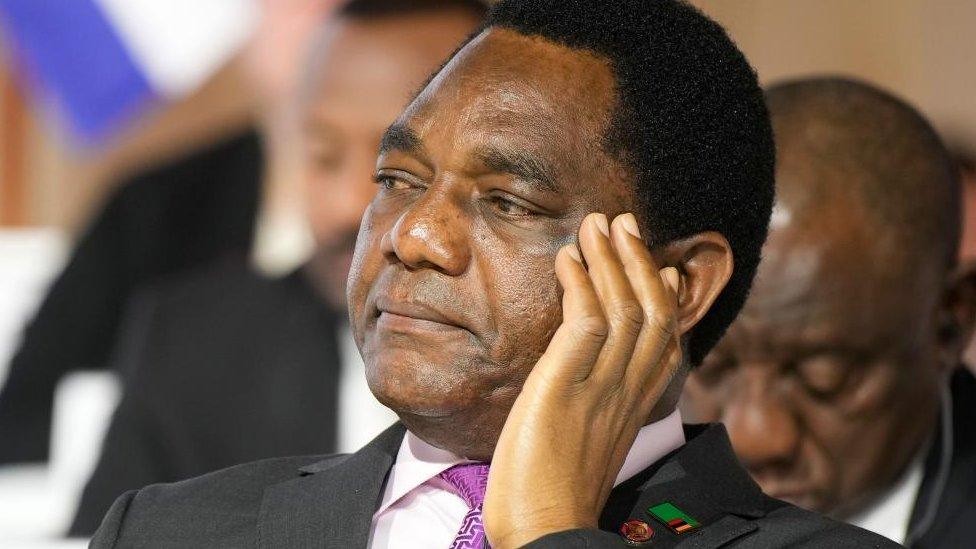
Over the past 15 months, Zambia has found itself on the receiving end of an unusually concentrated run of pressure from Washington: the first country made to post cash bonds for US tourist visas, a $50 million aid cut over stolen medicines, a $2 billion health deal that stalled after Lusaka called its terms unacceptable, reported threats to HIV funding tied to access to Zambian minerals, and an outgoing ambassador who spent his final months in the job publicly scoring the government on corruption.
None of these episodes happened in isolation. Together, they describe a relationship that has shifted, in little more than a year, from routine partnership to open friction.
FROM WASHINGTON'S DARLING TO PRESSURE POINT
It was not always this way. When Hichilema won power in August 2021, defeating Edgar Lungu, the reaction in Washington was warm almost immediately. Weeks later, addressing the UN General Assembly that September, President Joe Biden singled Zambia out by name, praising "the young people of Zambia who harnessed the power of their vote for the first time, turning out in record numbers to denounce corruption and chart a new path for their country."
It was a rare, direct presidential nod to a small African nation on the world's biggest diplomatic stage.
What followed was a string of senior US visits unusual for a country Zambia's size. Treasury Secretary Janet Yellen came to Lusaka in January 2023 to discuss debt restructuring.
Then, from 31 March to 1 April 2023, Vice President Kamala Harris visited Zambia as the final stop of a three-country Africa tour, meeting Hichilema at State House, announcing a $16 million grant for anti-corruption and governance programmes, and signing a Commercial Development memorandum of understanding.
Zambia was named co-host, alongside the US, of the second global Summit for Democracy that same year. Biden himself met Hichilema again in December 2024.
Across those years, Washington regularly held Zambia up as a model of democratic renewal in Africa, and American officials framed the relationship as a genuine partnership rather than a transactional one.
That is the backdrop against which the past year and a half of friction looks so sharp. The same country Biden praised by name at the UN and the same president Harris flew to Lusaka to meet is the one now paying to test a controversial visa bond programme, absorbing aid cuts, and being asked to trade mineral access for health funding.
THE VISA BOND THAT STARTED WITH ZAMBIA
The clearest, most recent example is the smallest in dollar terms but among the most symbolically loaded. In August 2025, the US State Department launched a pilot programme requiring visa applicants to post refundable bonds of up to $15,000 before receiving a B1 or B2 tourist or business visa.
Only two countries were named: Malawi and Zambia. The programme has since grown to cover 50 countries, and the State Department confirmed this month it is being made permanent, with the maximum bond rising to $20,000.
Officials cited Department of Homeland Security data showing a 10.45 percent B1/B2 overstay rate for Zambia. But that explanation was contested from the outset.
The Center for Global Development calculated that Zambia and Malawi together accounted for just 625 overstayers in 2023, about 0.2 percent of the global total, while CNN reported that neither country had the highest overstay rate even within Africa, and that the State Department would not explain why countries with higher recorded rates were left off the list.
The Council on American-Islamic Relations called it "a discriminatory wealth test." The department has never fully answered the question of why Zambia, specifically, was first.
A $50 MILLION CUT OVER STOLEN MEDICINE
The bond programme was not the first sign of strain. In May 2025, US Ambassador to Zambia Michael Gonzales announced, in a widely covered and visibly emotional press conference, that Washington was cutting $50 million a year in aid for medicines and medical supplies.
He said a US investigation of roughly 2,000 Zambian pharmacies between 2021 and 2023 found that nearly half were selling donated medicines meant to be free, including malaria, HIV and tuberculosis drugs, and that the Zambian government had failed to act meaningfully despite more than 30 meetings and over a year of warnings.
The US funds roughly a third of Zambia's public health system. Zambia responded by reporting 75 arrests in a crackdown on the theft and insisted there was no immediate drug shortage, while also warning diplomats against what it called media interference, an unusually sharp rebuke of the ambassador's public approach.
A $2 BILLION DEAL TIED TO MINERALS
The bigger flashpoint came a year later. Reporting by the New York Times, later confirmed by Zambian officials, described a draft US-Zambia health agreement worth up to $2 billion over five years, roughly $325 million of it for 2026, that tied continued American health funding to concessions on migration cooperation, data-sharing and preferential US access to Zambia's copper, cobalt and lithium deposits.
A House Foreign Affairs Committee memo reportedly warned that Washington would need to be seen "publicly" taking support away from Zambia to secure its priorities, a threat that alarmed health advocates given that roughly 1.3 million Zambians rely on antiretroviral drugs, more than 40 percent of them through PEPFAR.
The deadline for the agreement, 30 April 2026, came and went without a signature. Zambia's Former Foreign Affairs Minister, Mulambo Haimbe, said negotiations had stalled because of "unacceptable" American demands for preferential treatment, and Lusaka publicly rejected what it called a shift from "aid" to leverage.
The government has not rejected the deal outright, unlike Zimbabwe, which halted a comparable negotiation earlier in the year, and talks appear to remain open rather than closed.
AN AMBASSADOR'S PARTING CRITICISM
As his tenure wound down, Gonzales escalated further, telling Zambian audiences the country needed "leaders with integrity" more than it needed money, and criticising the appointment of an Anti-Corruption Commission director general who was himself under ACC investigation, the government's handling of the Sino Metals Kafue River tailings dam disaster, and the awarding of the $650 million Lusaka-Ndola Dual Carriageway contract to a Chinese firm with a prior fraud record.
Zambia's government called the allegations "mischievous" and "undiplomatic."
A PATTERN, NOT JUST ZAMBIA
Some of this reflects a broader shift in how the Trump administration is dealing with Africa as a whole, not a policy aimed at Zambia alone. South Africa has faced frozen aid, an expelled ambassador and 30 percent tariffs.
Zimbabwe was hit with an 18 percent tariff and responded by scrapping its own tariffs on US goods and compensating white farmers in an apparent bid to improve relations.
Washington has openly described its new approach to African aid as transactional, tying assistance to migration cooperation, mineral access and other US strategic interests rather than treating it as unconditional support.
What sets Zambia apart is the concentration and sequencing of friction points landing on one country in such a short window, several of them, including the visa bond pilot and the medicines cut, arriving well before the broader minerals-for-aid pressure became public.
Whether that reflects Zambia's mineral wealth, its overstay data, its debt position, or simply where Washington chose to test a new approach first, is a question US officials have yet to answer clearly, and one Zambia's government continues to press them on.
Stay with MUVI
Follow our reporting wherever you are