Health
Over 200 Zambian Doctors Inducted Into The Medical Profession
By Muvi TV News Desk·October 10, 2026
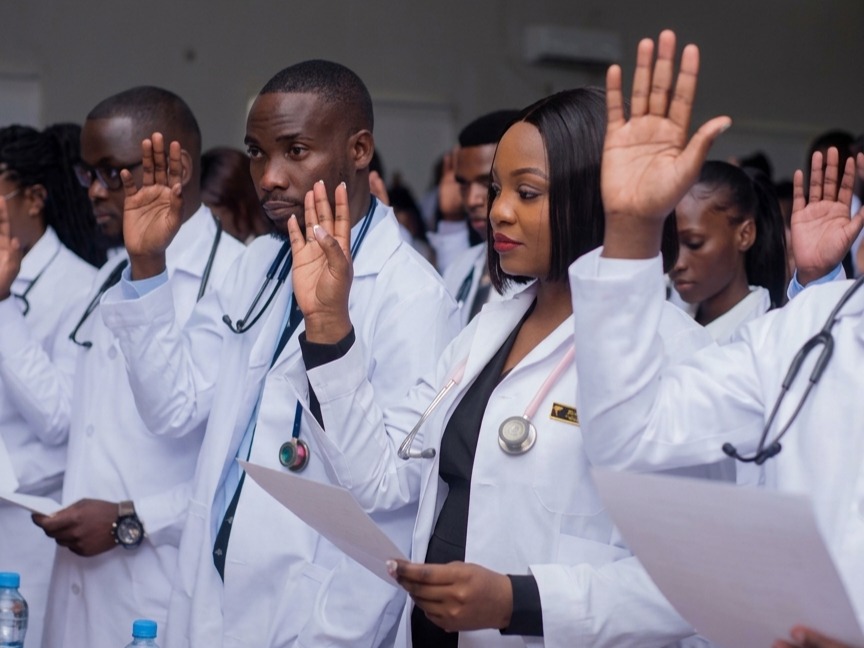
A medical degree takes years to earn. But the moment a graduate becomes a doctor carries a responsibility that no examination alone can measure- the duty to care for another human being.
That is the purpose of the physician’s oath, a public commitment to practise medicine with integrity, compassion and respect for human life. It is a promise that medical knowledge must be used responsibly, and that the patient must remain at the centre of every decision.
The meaning of that promise was at the heart of two induction ceremonies in Lusaka this week, where the Zambia Medical Association (ZMA) welcomed 246 newly qualified doctors into the profession.
The association inducted 180 graduates of Lusaka Apex Medical University at its Mutandwa Campus on October 5, followed by 66 graduates of Texila American University Zambia at Cheryl Gardens in Lilayi on October 8.
Across both ceremonies, ZMA leaders delivered a message that extended beyond the achievement of graduating from medical school: becoming a doctor is not simply the beginning of a career. It is the acceptance of a responsibility to patients and the wider community.
A promise that goes beyond medical knowledge
The tradition of the physician’s oath is commonly associated with ancient Greece and Hippocrates. Although the wording and forms of medical oaths have evolved over time, their central purpose remains relevant: to remind doctors that their professional skills must be guided by ethical conduct and a commitment to the well-being of those in their care.
At the Texila ceremony, ZMA Secretary General Dr Innocent Ngwira, speaking on behalf of association president Dr Masiku Phiri, described the occasion as more than a celebration of academic achievement. It was also a reminder of the responsibility graduates now carry as “custodians of health and life”.
Medicine, he said, is “not merely a career, but a noble calling grounded in integrity, compassion, humility and lifelong learning”.
The distinction matters. A doctor may have the knowledge to diagnose an illness or prescribe treatment, but the oath speaks to how that knowledge should be applied: with honesty, sound judgement and respect for the person seeking help.
At the Lusaka Apex Medical University ceremony, Ngwira also emphasised the need for doctors to uphold ethical standards in all settings, including on social media, where professional conduct can extend beyond the hospital or consultation room.
Technology is changing medicine. The human duty remains.
The oath is being taken at a time when medicine is changing rapidly. Artificial intelligence, digital health records and telemedicine are creating new ways to diagnose illnesses, manage patient information and deliver care.
But technological progress also raises an important question: how can doctors use new tools without losing sight of the person behind the medical record?
Addressing the Lusaka Apex graduates, Dr Masiku Phiri urged them to embrace technological advancement without abandoning the human qualities that define good medical practice.
He noted that patients are becoming better informed and that artificial intelligence is playing an increasingly important role in healthcare. Even so, he stressed that clinical reasoning and compassion must remain central to medical decisions.
At the Texila ceremony, Dr Godfrey Phiri, speaking on behalf of Ministry of Health Permanent Secretary for Technical Services Dr Kennedy Lishimpi, echoed that message.
He pointed to Zambia’s investment in digital health systems, including SmartCare, electronic health records and telemedicine, but cautioned that technology should enhance care rather than replace the human connection between doctor and patient.
The message is consistent with the purpose of the oath. Technology may help a doctor reach a diagnosis, but it cannot remove the responsibility to exercise professional judgement, communicate with patients and treat them with dignity.
The oath also carries a responsibility to communities
A doctor’s professional duty does not end at the doors of a large hospital.
For many communities, access to healthcare depends on the availability of qualified personnel in district hospitals, rural health centres and local outreach programmes. Where staffing and resources are limited, the need for committed health workers can be particularly acute.
Dr Godfrey Phiri urged the 66 Texila graduates not to measure success solely by whether they work in major hospitals, but by their willingness to serve where healthcare needs are greatest.
That appeal gives the oath a broader meaning. It is not only about how a doctor treats an individual patient, but also about how medical professionals contribute to the health of the communities around them.
The induction addresses also highlighted the importance of continued learning and professional support. Ngwira encouraged the new doctors to join professional bodies such as ZMA, seek mentorship and consider different paths in medicine, including clinical specialisation, research and academia.
His message was that graduates should not feel abandoned after leaving university. A medical career requires continued development, guidance and a willingness to learn throughout professional life.
Why the promise still matters
The other speakers at the ceremonies reinforced the same principles. National Forensic Authority Executive Director Brig. Gen. Prof. Lawson Simapuka highlighted the importance of accurate medical documentation, scientific rigour and ethical conduct, particularly as medicine and forensic science increasingly intersect.
At Lusaka Apex, Vice Chancellor Prof. Evarist Njelesani urged graduates to treat patients with kindness, respect and humility. Dean of Medicine Dr Fredrick Sinyinza said becoming a physician went beyond acquiring knowledge to include compassion and a commitment to healing.
At Texila, Vice Chancellor Dr Balamurugan Easwaran described academic achievement as the beginning of greater professional responsibility, while Dean of the School of Medicine Dr Amit Kumar Singh reminded graduates that success depends on character and values as well as clinical knowledge.
The ceremonies ended with the graduates reciting the oath, marking their formal entry into the profession.
The words of an oath cannot guarantee that every decision a doctor makes will be right. Nor can a ceremony prepare graduates for every difficult diagnosis, ethical dilemma or moment of uncertainty they will encounter.
But the oath establishes the standard they are expected to pursue. It reminds doctors that the privilege of treating patients comes with obligations: to act with integrity, to keep learning, to respect human dignity and to put the welfare of those in their care first.
For the 246 new doctors inducted in Lusaka, the white coat marks the beginning of professional practice. The oath gives that practice its deeper purpose.
Stay with MUVI
Follow our reporting wherever you are