Education
Rwanda’s Government Schools Are Winning Parents Over. Can Zambia Do the Same?
·August 24, 2026
In Rwanda, a quiet reversal of fortune has been unfolding in education for close to two decades: government schools have become so well resourced that private schools, once the preferred choice of parents who could afford them, are shutting their doors for lack of students. It is a rare thing globally, a public school system outcompeting the private sector on quality rather than simply on price, and it offers Zambia, mid-way through its own ambitious free education experiment, a useful, if sobering, point of comparison.
WHAT HAPPENED IN RWANDA
The shift traces back to 2007, when Rwanda introduced free lower-secondary education, and accelerated in 2012 when that guarantee was extended to a full twelve years of basic education. The government did not simply remove fees and leave schools to cope. It invested heavily and specifically in making public schools competitive: 2,679 new classrooms built at a cost of roughly $20 million, more than 250,000 free laptops distributed to 450 public schools, a guarantee that every student receives a textbook for every subject, and a national school feeding programme, all backed by an education allocation that reached 19 percent of the national budget, over $260 million, in recent years.
The results, tracked over more than a decade, are stark. Private school enrolment fell from 101,510 students in 2012 to 79,076 a few years later, even as enrolment in public and government-aided schools nearly doubled over the same period. More than 30 private schools closed indefinitely in a single recent year alone, and industry figures say 70 percent of the private schools association's members were struggling to stay afloat by 2018.
Private school proprietors, facing empty classrooms and mounting debt, asked government to subsidise their institutions at public school rates. Rwanda's government refused, insisting public money would go toward strengthening public schools rather than propping up a private sector that could no longer compete. "You cannot operate next to a school where education is free and expect to compete," one long-serving private school director told researchers, describing the loss of a thousand students in three years.
WHERE ZAMBIA STANDS TODAY
Zambia's own free education policy, introduced in 2021, shares Rwanda's starting instinct: remove the financial barrier and let access follow. By most measures, it has succeeded on that specific goal. Roughly two million additional children now attend school who would not have otherwise, government has committed over $1 billion to the sector since the policy began, and in an Afrobarometer survey, eight in ten Zambian families with children reported benefiting directly from the policy.
But the comparison with Rwanda becomes less flattering once the conversation turns to quality rather than access. Zambia's Parliamentary Budget Office has found that increased enrolment came with overcrowding, high teacher-pupil ratios and limited materials, and that early childhood access targets and Grade 12 completion targets were both missed between 2021 and 2024.
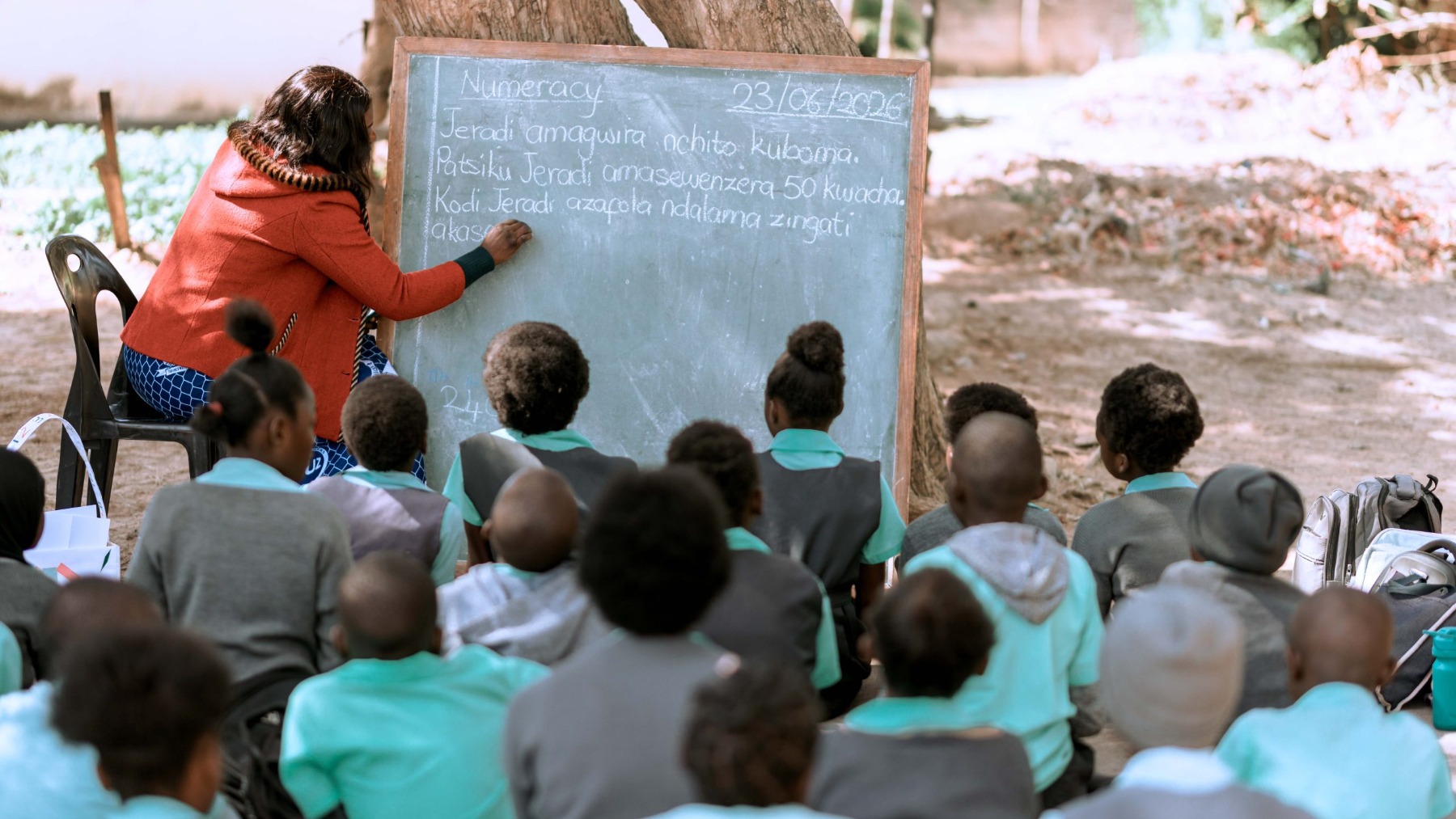
Reporting from Eastern Province has described classrooms with more than 100 learners, students sharing a single textbook among six or seven classmates, and pupils sitting on the floor for lack of desks. Government has responded with real investment of its own, recruiting more than 41,000 additional teachers and building new schools, but multiple independent academic studies of specific districts, Kabwe, Monze, Lusaka among them, describe the same pattern repeating: access expanding faster than the infrastructure and staffing needed to protect quality.
WHAT THE COMPARISON ACTUALLY SUGGESTS
The lesson from Rwanda is not simply "spend more," though the scale of Rwanda's investment, and its sustained share of national budget over more than a decade, is real and relevant. The more precise lesson is about sequencing and discipline. Rwanda built classrooms and distributed materials at a pace that kept ahead of, or at least alongside, enrolment growth, and it treated the twelve-year policy as a multi-decade commitment rather than a single budget cycle's achievement. It also made a deliberate political choice, refusing to divert public resources toward subsidising private alternatives once those alternatives began to struggle, keeping its investment concentrated on strengthening the public system it had committed to.
Zambia's challenge, by contrast, has so far been defined by an access-first, infrastructure-catching-up pattern, expanding enrolment rapidly and then working to build the classrooms, hire the teachers and print the textbooks to match afterward. That is not a condemnation of the policy itself, which enjoys broad public support and has genuinely opened school doors that fees once kept closed.
It is a specific, fixable gap: the difference between a country that planned its infrastructure investment ahead of demand and one that has been building it in response to demand already realised. Rwanda took the better part of two decades to get here. Zambia is roughly five years into a policy widely regarded as one of the government's signature achievements. Whether Zambian public schools eventually become good enough, not just free enough, to draw students away from private institutions on merit, the way Rwanda's have, will depend less on whether more money is spent, and more on whether it arrives before the classrooms are already full.
Stay with MUVI
Follow our reporting wherever you are