
Faith & Values
Why some Christians believe AI could be the Antichrist
By MUVI Editorial·September 25, 2026
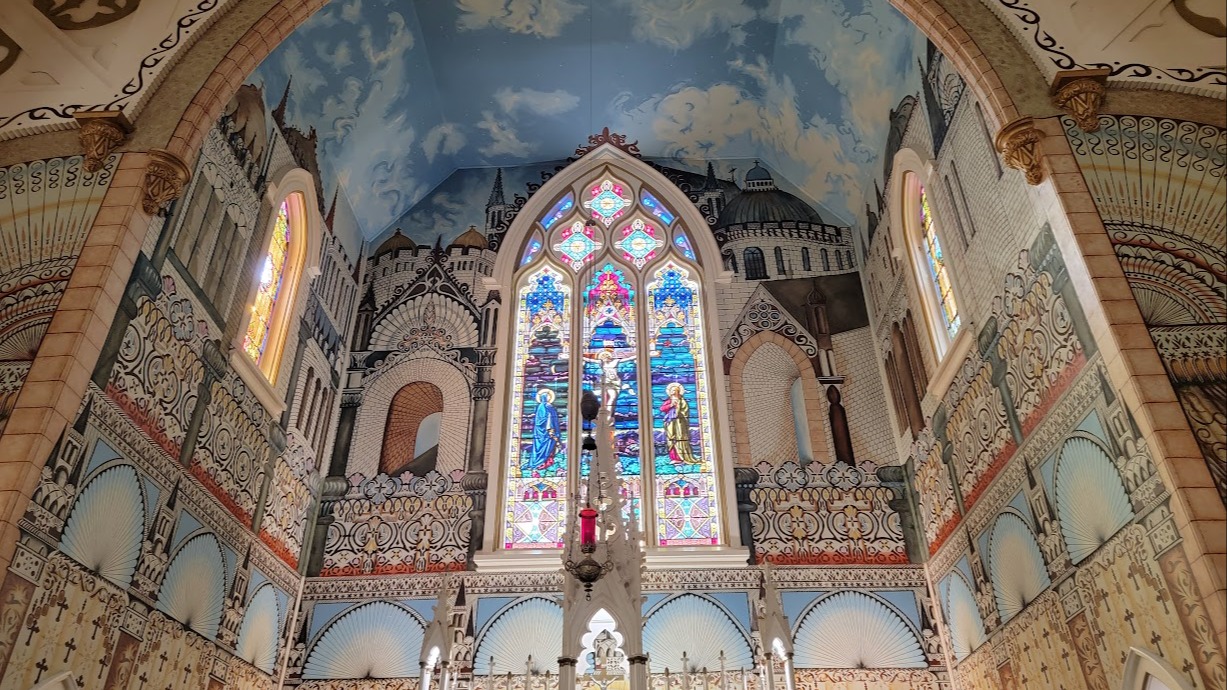
As artificial intelligence moves from novelty to near-daily presence in homes, offices and phones, a quieter conversation has been unfolding inside parts of the Christian community, one that treats AI's rise not just as a technological shift, but as a possible sign of biblical prophecy unfolding in real time.
WHERE THE FEAR COMES FROM
The concern traces back to the Book of Revelation, specifically its description of the Antichrist, also called the Beast, and the "mark of the beast," a symbol of allegiance to that figure, received on the right hand or forehead, without which, the text says, people would be unable to buy or sell. For centuries, Christians have debated what that mark might actually be, medieval Christians speculated about branding and tattoos; more recently, some have pointed to barcodes, microchips and digital currencies. Rapid advances in AI have simply become the newest lens through which that old question is being asked. Writing on the theology forum Christian Forums, one user asked the question many now quietly hold: "So, will AI be the mechanism to bring about this image of the Beast to be worshipped?"
The specific fears vary. Some Christians point to AI's capacity for surveillance and its growing role in economic systems, noting that an AI-driven system could plausibly dictate who gets to participate in commerce, echoing Revelation's description almost exactly. Others focus on AI's ability to generate convincing speech and imagery, wondering whether a sufficiently advanced system could functionally "speak" the way Revelation describes an image of the beast doing. One faith leader, discussing the topic publicly, put it directly: "I see the mark of the beast scenario coming into play," pointing to how fast AI's capabilities have advanced.
NOT ALL CHRISTIAN LEADERS AGREE
The belief is far from universal, and many prominent Christian voices have pushed back firmly against it. Pastor Greg Laurie, addressing the question directly, said plainly: "I don't believe AI is the Antichrist. When the Bible speaks of the Antichrist, I believe it is referring to a real, literal person." Other commentators have made a similar distinction, that AI itself is a tool, morally neutral in the same way any technology is, and that the real spiritual danger lies not in the technology itself but in what any system, technological or otherwise, might one day demand of the people who use it. One writer put the theological reasoning simply: "AI is not the Beast, but it can become an instrument of the Beast's pattern the moment it asks for what is God's alone, our trust, our identity, our obedience, our worship." Others have made a historical point, that every major new technology, radio, television, barcodes, the internet, has at some point been floated by someone as a possible fulfilment of the same prophecy, and none of those predictions have held up over time.
WHY THE QUESTION KEEPS RESURFACING
What both sides of this debate tend to agree on is that the underlying anxiety is not irrational on its face. AI genuinely is reshaping how economic participation, identity verification and communication work, areas Revelation's own imagery touches directly. The disagreement is less about whether those changes matter, and more about whether they represent prophecy specifically unfolding, or simply the latest chapter in a much older, recurring pattern of powerful new technology unsettling people's sense of control over their own lives. For many Christians navigating that uncertainty, the more practical guidance emerging from within the faith itself is less about identifying AI as the Beast, and more about approaching it, like any powerful tool, with discernment rather than either blind adoption or blind fear.
Stay with MUVI
Follow our reporting wherever you are