Opinion
189 Leaders Will Take Office Without a Vote - What It Means for Zambia's Democracy
By Muvi TV News Desk·July 25, 2026
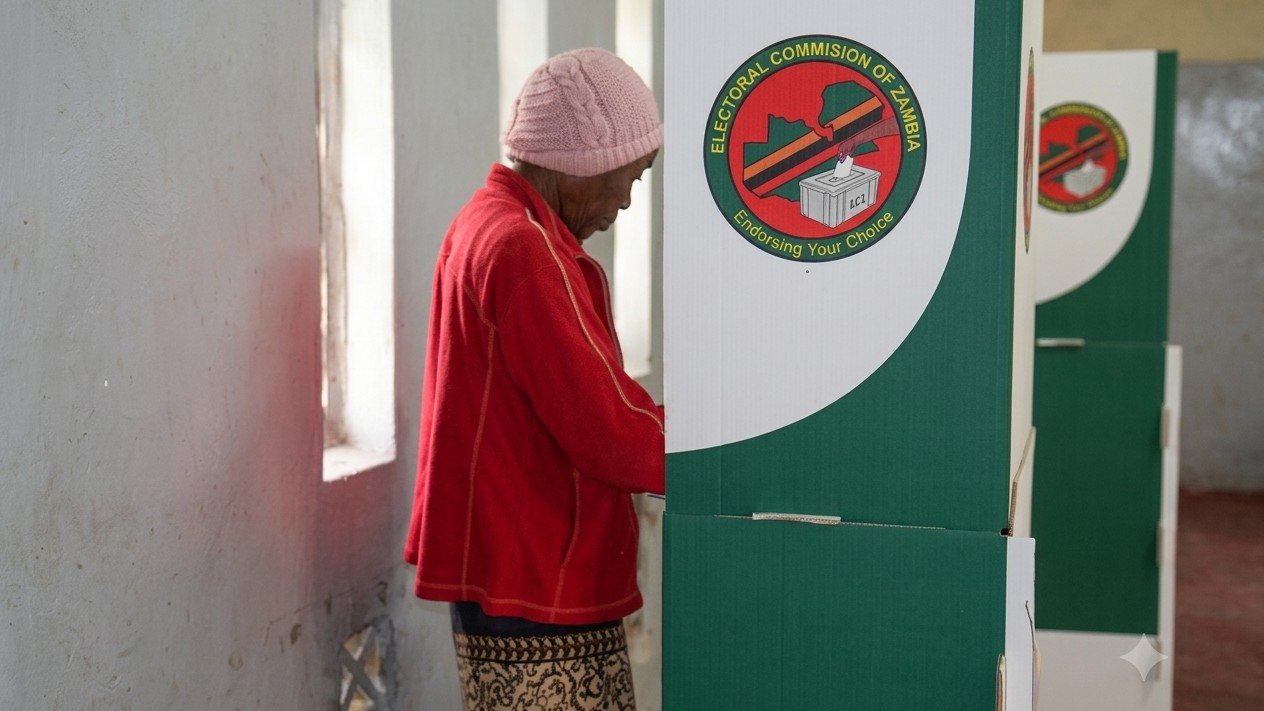
As Zambia prepares for one of its most consequential general elections, an important story is unfolding long before voters cast their ballots on August 13.
For 189 political leaders, Election Day will not determine their political future. Their victory has already been secured.
The Electoral Commission of Zambia (ECZ) has confirmed that 6 mayoral candidates, 7 parliamentary candidates and 176 ward councillors have been declared unopposed, meaning they automatically assume office because no other candidates were successfully nominated to challenge them.
The figures, announced by ECZ Commissioner McDonald Chipenzi during a media briefing in Dubai, where Zambia's ballot papers are being printed, have quietly reignited an enduring question about the health of the country's democracy.
Not whether the election will be held.
But whether democracy can truly thrive where there is no choice.
At its heart, democracy is built on competition.
It asks citizens to weigh ideas, scrutinise candidates, compare visions and ultimately decide who should govern them.
An uncontested election removes that choice.
Instead of persuading voters, candidates are declared elected simply because no opponent entered—or remained—in the race.
Legally, there is nothing unusual about the process. Zambia's electoral laws provide that where only one valid nomination is received, the candidate is declared duly elected.
The ECZ's responsibility is to administer that law.
Yet the broader democratic question extends beyond legality.
It touches on legitimacy, accountability and citizen participation.
The unopposed declarations account for:
6 of Zambia's 116 mayoral and council chairperson positions
7 of the country's 226 parliamentary constituencies
176 of 1,858 local government wards
In total, 189 elective offices will be filled without voters making a choice at the ballot box.
Expressed differently, nearly one in every ten ward elections will not take place because there is only one candidate.
While parliamentary contests remain overwhelmingly competitive, the concentration of uncontested local government races raises questions about political organisation across the country.
Political analysts say there is rarely a single explanation.
Sometimes opposition parties fail to identify candidates.
In other cases, parties struggle with organisation, finances or nomination requirements.
Candidates may also withdraw before nominations close or fail to meet legal requirements.
Reports surrounding this year's nominations indicate that several unopposed victories came after opposition parties did not field candidates before nomination deadlines.
Whatever the reason, the outcome is the same.
The voter loses the opportunity to compare alternatives.
Competitive elections do more than produce winners.
They compel candidates to defend their record, answer difficult questions and explain why they deserve public office.
Without that contest, an important layer of democratic accountability disappears.
Leaders who assume office unopposed are no less legitimate under the law.
However, they enter office without experiencing the scrutiny that accompanies an electoral contest—public debates, policy comparisons, campaign engagement and ultimately, the judgment of the electorate at the ballot box.
For citizens, elections are not simply about selecting leaders.
They are among the few moments when public officials are required to listen as much as they speak.
Speaking from Al Ghurair Printing and Publishing LLC in Dubai, Commissioner Chipenzi stressed that the Commission remains focused on delivering a credible election.
He said ballot paper quantities had been adjusted to reflect the unopposed seats and confirmed that printing was progressing according to schedule.
As of 20 July 2026, the Commission had printed:
7,708,700 local government ballot papers for 1,542 wards
6,722,550 mayoral and council chairperson ballot papers for 96 districts
6,628,500 parliamentary ballot papers for 168 constituencies
He also confirmed that all 9.1 million presidential ballot papers had been printed.
Commissioner Chipenzi reiterated that the ECZ operates an open-door policy, describing stakeholders as essential partners in the electoral process. He maintained that the ballot production process incorporates strict transparency and security measures and urged observers to avoid spreading misinformation.
The ECZ can only administer the law that Parliament has enacted.
Whether there are one, two or ten candidates for a seat is ultimately determined by political parties and those seeking public office—not by the Commission itself.
That is why the declaration of 189 unopposed leaders should not simply be viewed as an administrative statistic.
It is also a measure of political competition.
Strong democracies are strengthened when ideas compete, candidates are tested and voters are given genuine alternatives.
Where competition is absent, elections may still be lawful.
But they become less about choosing leaders and more about confirming them.
As Zambia heads toward polling day, the integrity of the electoral process will rightly receive close attention.
Equally important, however, is a broader conversation about ensuring that future elections offer citizens what democracy promises above all else:
A meaningful choice.
Stay with MUVI
Follow our reporting wherever you are