World
Trump Signs New Orders Restricting Birthright Citizenship
By Muvi TV News Desk·August 7, 2026
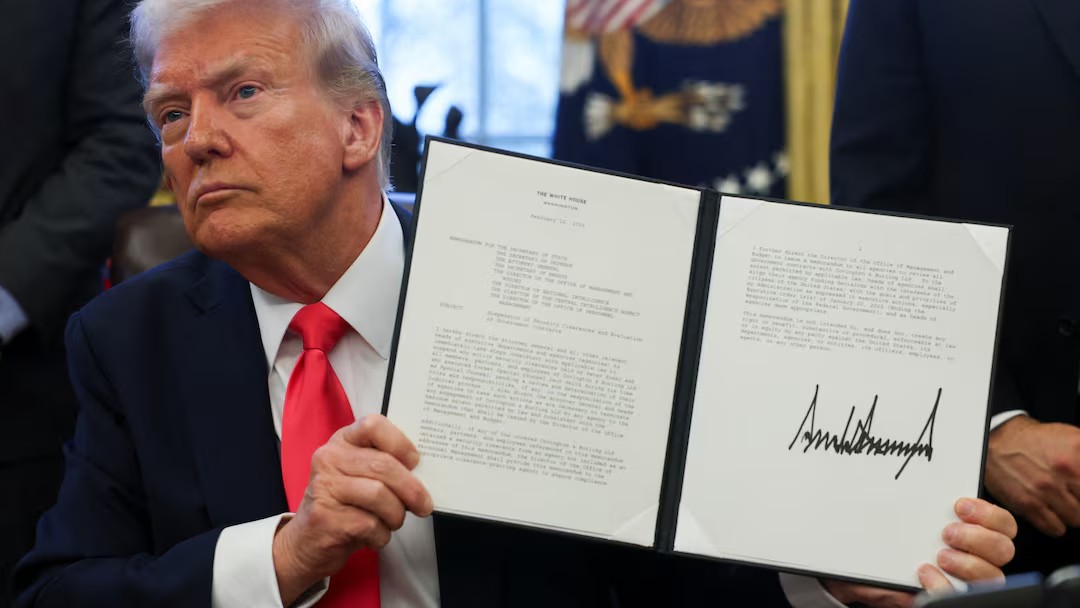
US President Donald Trump has signed two new executive orders seeking to restrict birthright citizenship, weeks after the Supreme Court struck down his earlier attempt to end the constitutional guarantee.
The first order, signed in the Oval Office on Thursday, is narrower in scope than the one the court rejected in June. It focuses on excluding specific categories of people from automatic citizenship, including children born to adults connected to foreign embassies or organisations, members of foreign terrorist organisations, and anyone classified as an "alien enemy" of the United States.
It also seeks to restrict birthright citizenship for children whose parents engaged in fraudulent activity to obtain it, and extends to children born to non-citizen parents in certain US territories where citizenship is not conferred by federal statute, such as American Samoa.
The second order targets so-called "birth tourism," the practice of pregnant foreign nationals travelling to the US specifically to give birth so their child gains automatic citizenship. To enforce it, Trump said there would be "very big crackdowns," saying some individuals were paying their way into the country or building businesses around exploiting the birthright citizenship law. White House deputy chief of staff Stephen Miller, who has been the chief architect of the administration's immigration policy, called the birth tourism order one of the most important actions Trump has taken on immigration.
The move is widely seen as an attempt to work around the Supreme Court's ruling in Trump v. Barbara on 30 June, which struck down Trump's Day One executive order seeking to end automatic birthright citizenship for nearly all children born on US soil, finding it violated the 14th Amendment.
Speaking in the Oval Office, Trump described that earlier ruling as "very unfortunate," saying his administration was "making adjustments." The White House has argued the new orders fall within historically recognised exceptions to birthright citizenship that the Supreme Court itself acknowledged in its ruling.
Immigration advocates and legal experts maintain the Constitution is clear on who qualifies as a citizen, and argue birthright citizenship benefits the US by giving everyone an equal stake in the country's future, warning that restricting it risks creating a class of people born in the country without full citizenship rights.
Cody Wofsy, deputy director of the American Civil Liberties Union's Immigrants' Rights Project, said the Supreme Court had "already decided this issue." The new orders are expected to face fresh legal challenges under the 14th Amendment, which guarantees citizenship to nearly all persons born in America.
Government figures show birth tourism itself remains statistically rare: fewer than 10,000 births in the US in 2024 were recorded to mothers with foreign addresses, against roughly 3.6 million total US births in 2025, a scale researchers at the Migration Policy Institute say has drawn outsized political and legal attention relative to its size.
Stay with MUVI
Follow our reporting wherever you are